Glowworms
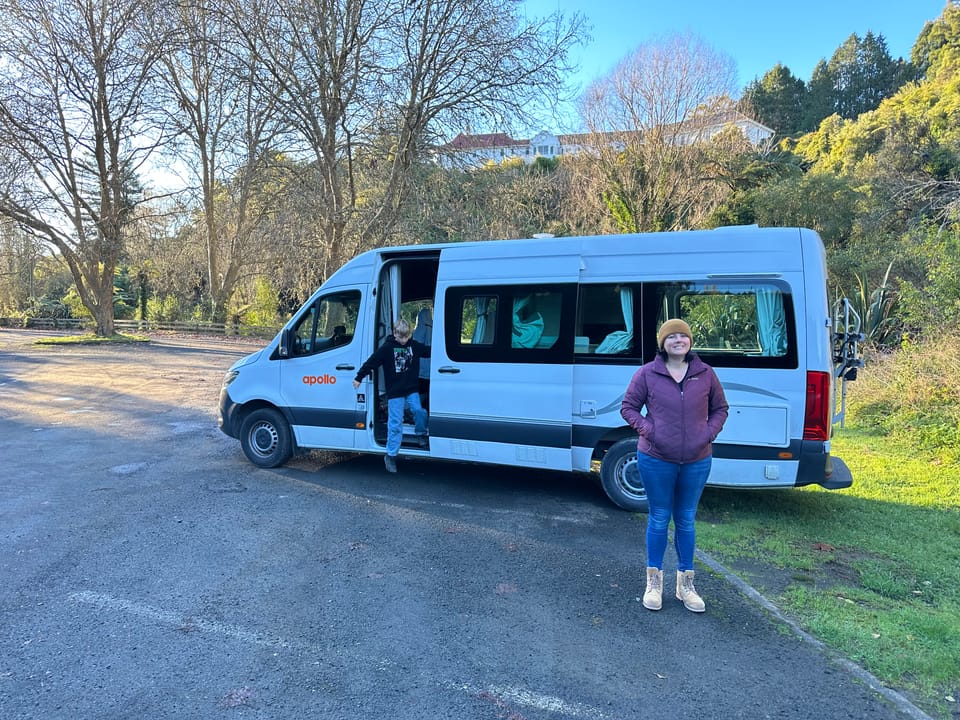
I know you’re all sitting on the edge of your seats, so let’s address the elephant in the room.
The van started.
Not only did it start, but on the first try, as though it hadn’t spent the previous day in intensive care, recovering from a near-fatal electrical event. No hesitation. No strange noises. No dashboard lights screaming for help. Just one push of the ignition button and the reassuring hum of a healthy-sounding engine.
Naturally, I trusted it completely. Not!
Luckily, our first drive of the day was short. Very short. Just 500 metres down the road to the glowworm caves we’d missed out on the day before.
Honestly, we could have walked. But after everything the van had put us through, driving half a kilometre was less like transportation and more like a controlled medical trial.
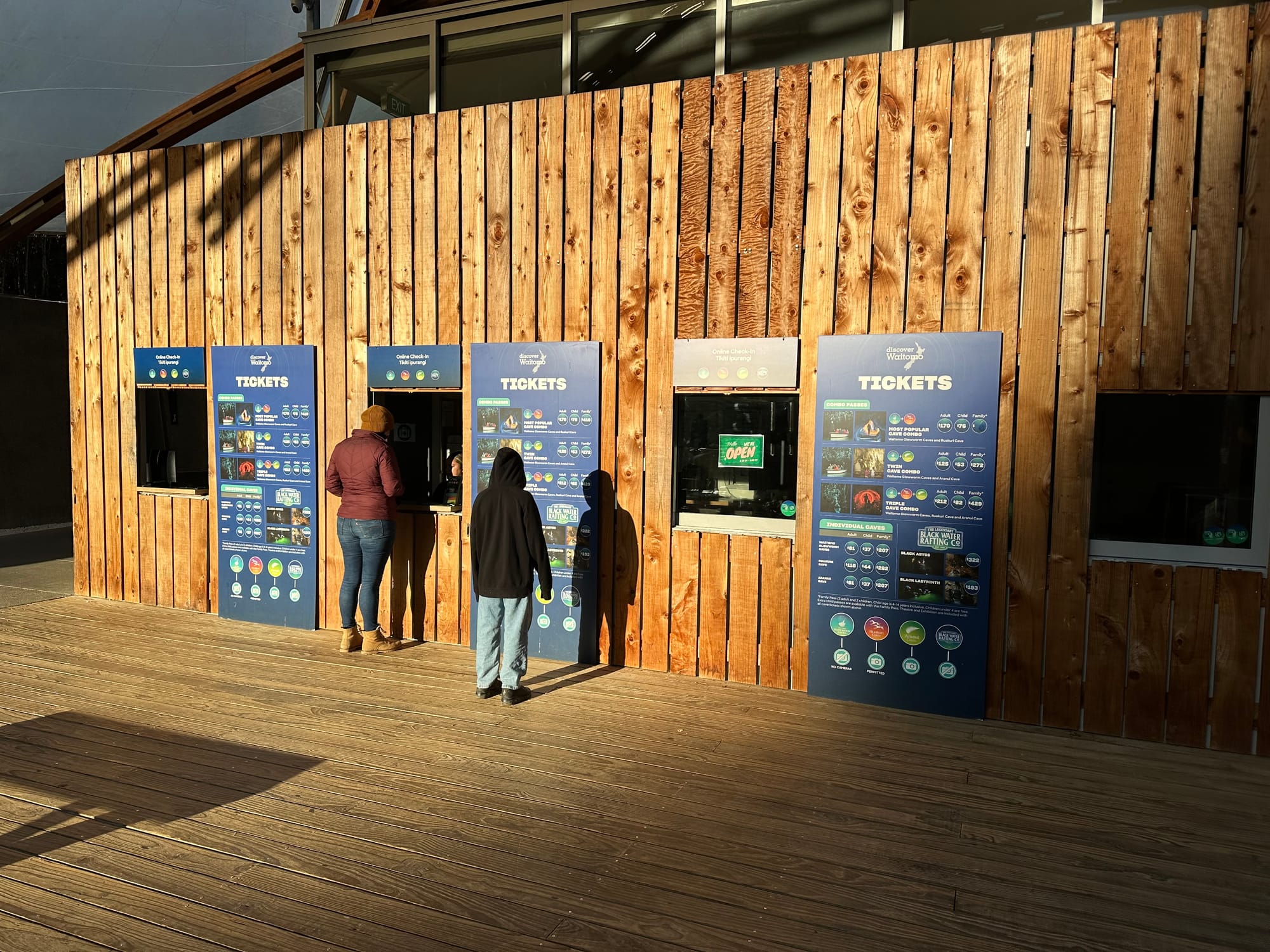
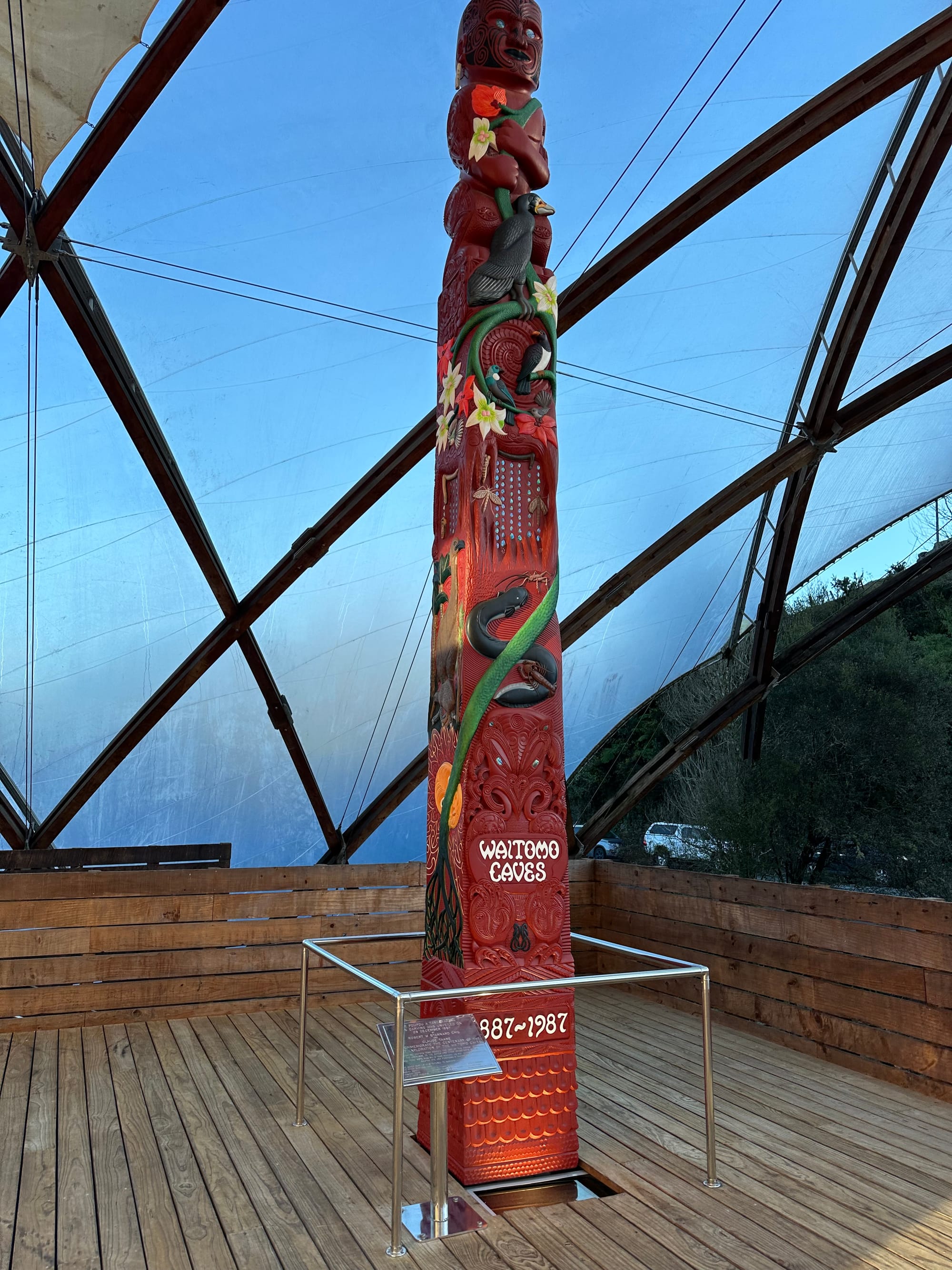
We checked in and settled into the cafe to wait for our 9:20 tour. While we waited, we couldn’t help but watch the guides warming up for the day ahead.
It felt like Glowworm: The Musical. They sang to anything that came over the speakers, boogying around as if no one was watching, though we definitely were. Not that it seemed to bother them.
To be fair, their enthusiasm was contagious, and by the time our tour was called, we were well and truly amped up.
A short walk down a winding path brought us to the cave entrance. Around 70 metres below us was the exit, where we would apparently reappear later.
After a few safety instructions from our guide, "don’t touch anything, try not to die," the prison-like door swung open, revealing a tunnel lined with brilliant white limestone. We stepped inside and began our descent.
Our first stop was beside a large rock that had fallen from the ceiling, which also provided our guide with his first opportunity for a bit of stand-up comedy.
He explained how the lines in the limestone could be used to estimate its age, then casually announced that the rock had fallen from the ceiling yesterday.
There were a few concerned gasps from the group.
“Yesterday in geological terms,” he clarified.
It had actually fallen around 2,000 years ago…
A few people still looked uneasy, especially those whose first language wasn’t English. They had understandably stopped listening at “fell from the ceiling yesterday.”
Our guide quickly moved on, reassuring everyone that the roof was unlikely to collapse on us. Comforting.
From there, we continued into the Grand Cathedral. It was a huge chamber named for its impressive acoustics and cathedral-like ceilings. Our guide asked whether anyone would like to sing for the group.
Erin and I immediately shrank by about ten inches and avoided eye contact with everyone.
To our relief, a Māori family raised their hands and sang a beautiful waiata.
Our guide then sang another song and invited anyone who knew the words to join in. One by one, voices rose from around the room. The chamber seemed to come alive.
It was a proper goosebump moment. Honestly, Māori people have some serious pipes.
We continued deeper into the cave as the lights faded, giving our eyes time to adjust for the main event.
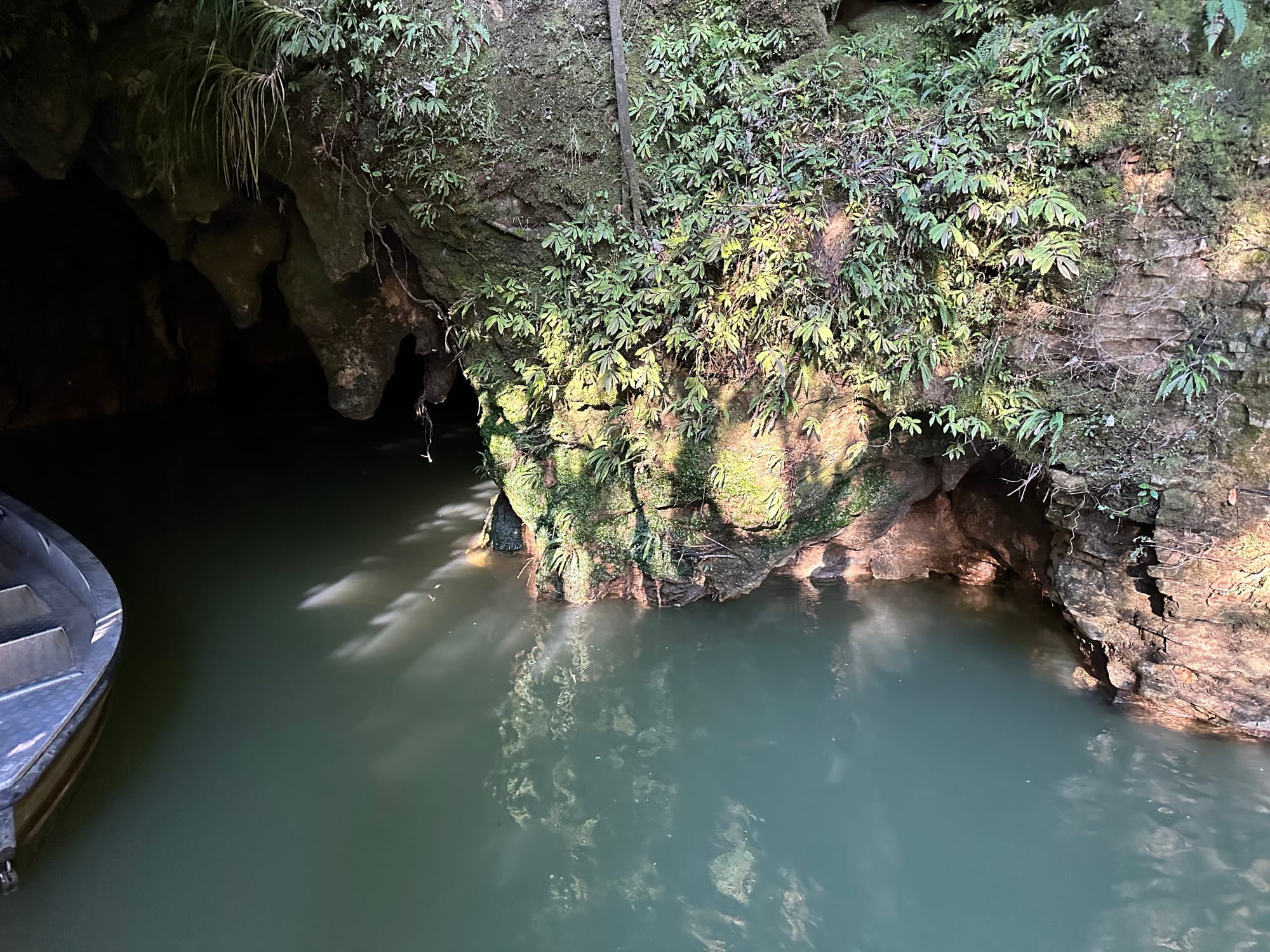
Eventually, we reached a small dock and climbed into a large tinny. Ropes hung from the ceiling, which our guide would use to pull the boat through the cave.
Once everyone was on board, he grabbed the first rope and gently pulled us away from the dock.
A few tiny blue lights appeared overhead.
Then a few more.
Then the ceiling opened up.
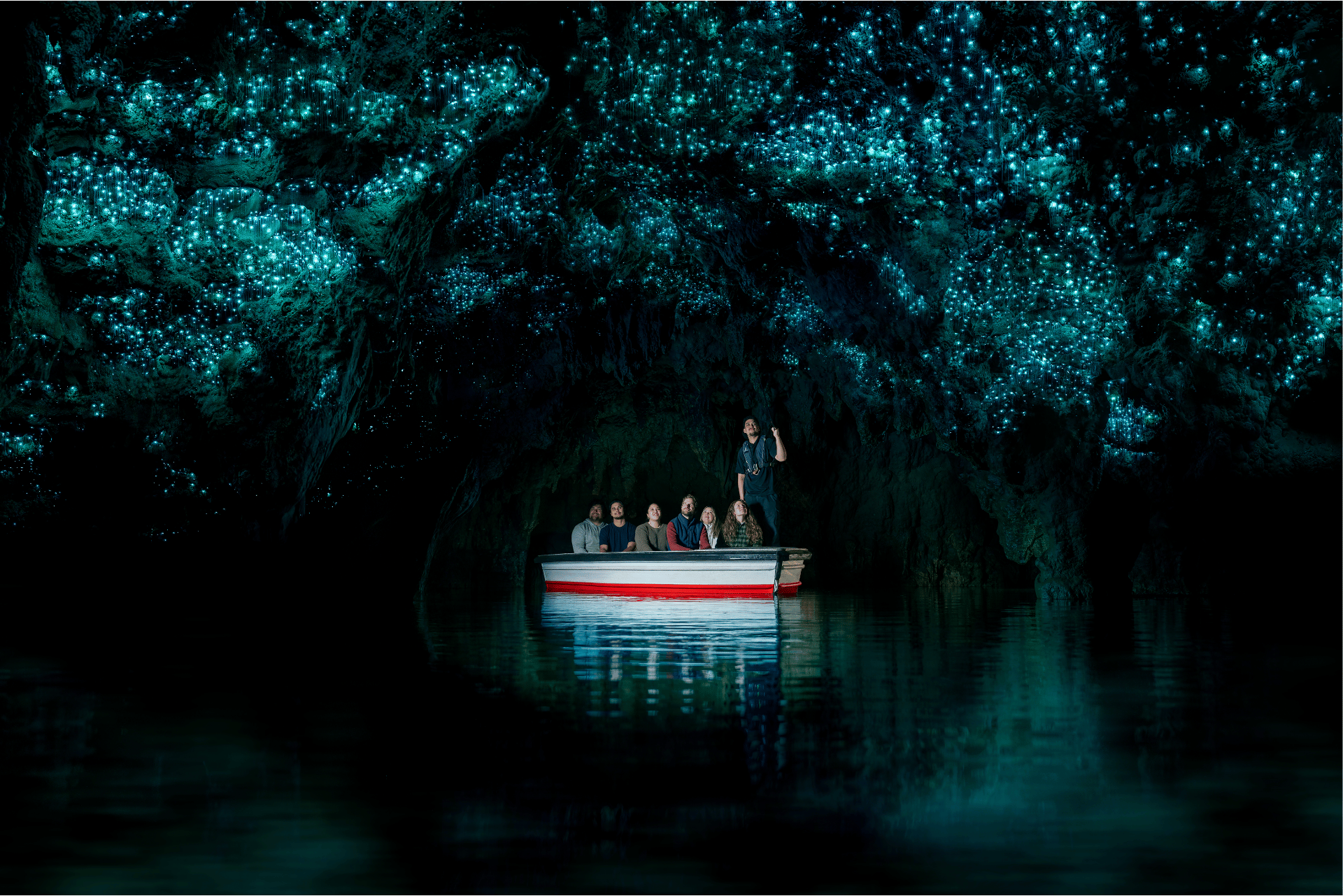
Thousands of glowworms stretched above us, turning the cave ceiling into a vast field of stars. It was like gazing up at the night sky on a perfectly clear evening, far from city lights or any hint of light pollution. Except these stars were alive.
The boat drifted silently beneath them while everyone sat with their heads tilted back, taking it all in.
After a few minutes, our guide pulled us gently towards the cave's exit, where we climbed back onto dry land.
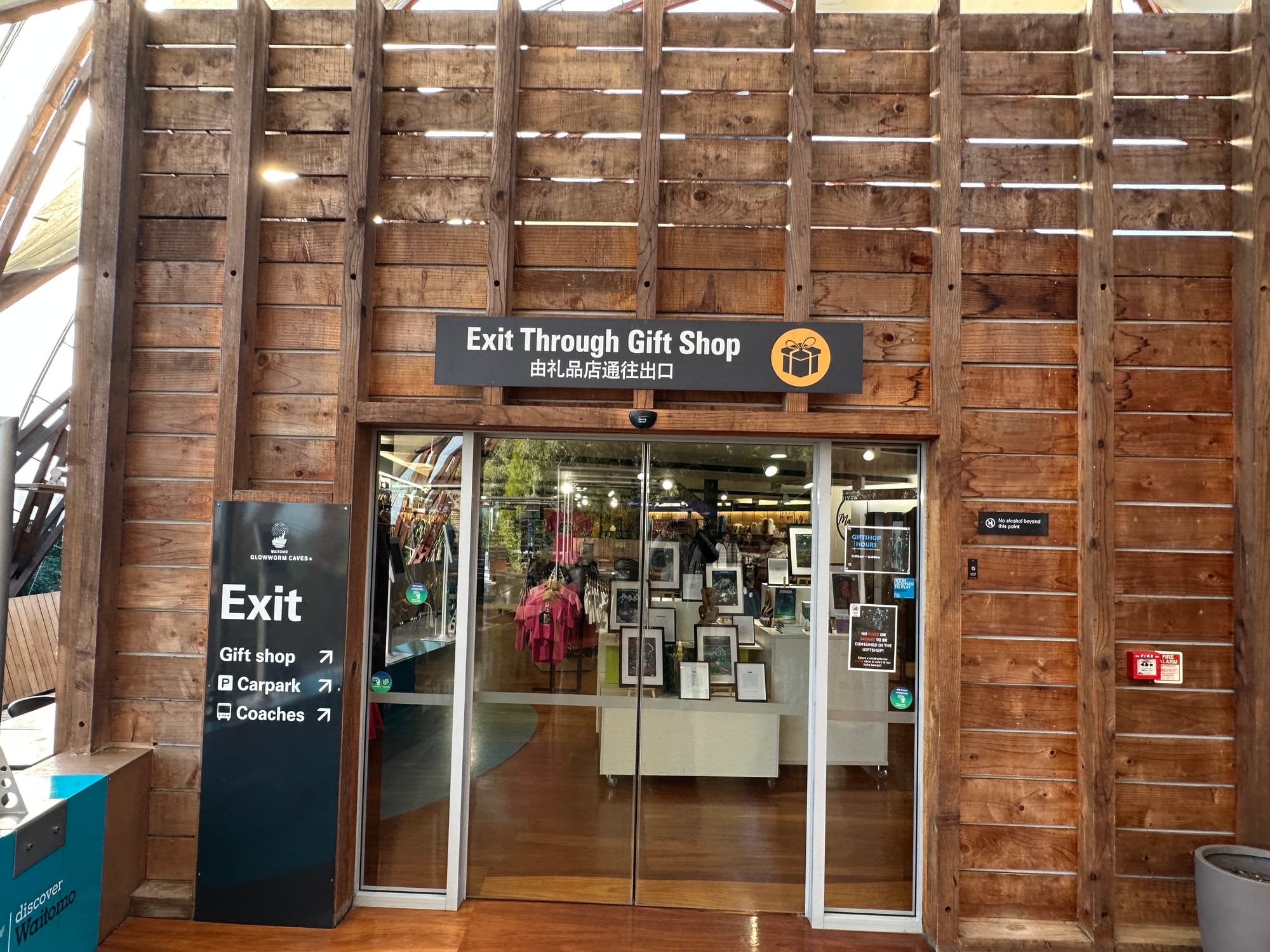
And, like every great New Zealand tourist attraction, our magical underground adventure concluded in exactly the same way: Please exit through the gift shop.
Comments ()