Hakone: Fuji, Where Are You?
We said goodbye to Osaka and boarded the Shinkansen once more, this time bound for Odawara, the gateway to Hakone and, eventually, Togendai.
The mission was simple. Get a front-row seat to Mount Fuji.
A quick update on the tactile paving I’ve been admiring. Odawara appears to be the end of the line.
From Odawara, we boarded a bus and wound our way up into the mountains towards Togendai.
The road follows the Hayakawa River through the mountains, passing through little towns that seem barely wide enough to accommodate it.
There aren’t any back streets here.
Houses, shops, and restaurants are squeezed into whatever space the mountains leave them, sometimes sitting so close to the road you could reach out the window and touch them.
Down below, the river is this deep turquoise blue. Huge stones are scattered through the water, with white water rushing between them.
It felt like we’d caught the bus to Helm’s Deep.
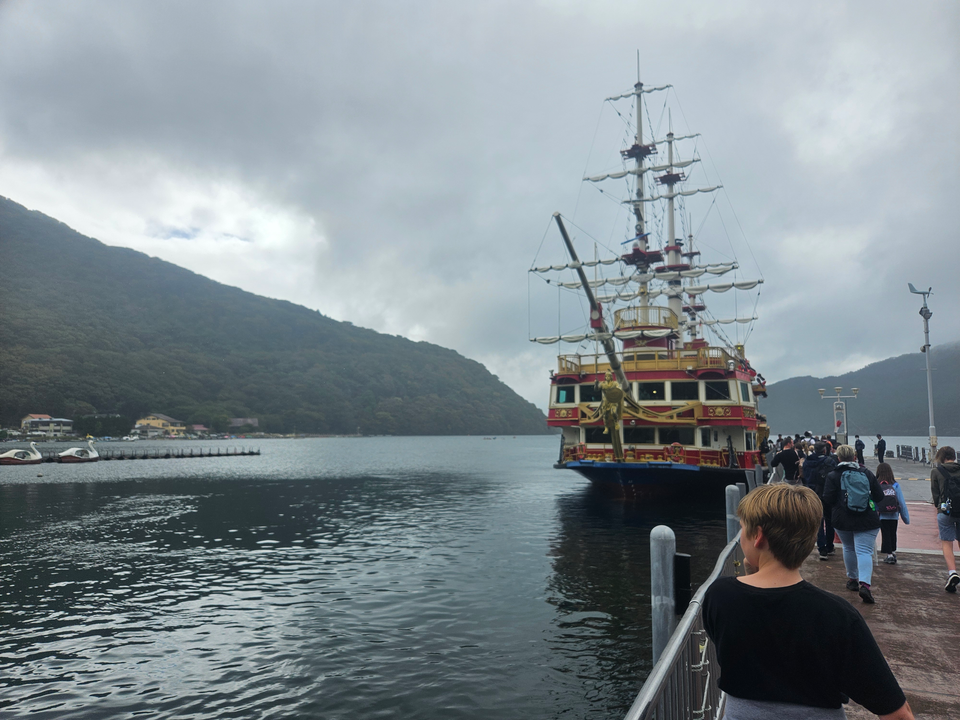
We arrived at Togendai as the sun began to set. Perched on the edge of Lake Ashinoko, it greeted us after a full day of trains and buses as we lugged our bags toward the hotel.
At the hotel, it was another self-check-in experience, except this time a real person appeared on the iPad. It was comforting to know there are still humans up here somewhere, even if the hotel itself was completely unmanned.
You know that feeling when you open a hotel room door for the first time, when expectation meets reality? Well, this wasn’t the shoebox we’d come to expect, and almost grown used to.
You enter on the middle floor, where a kitchen and lounge room open onto a balcony. Upstairs, there are two bedrooms, and the boys have four beds between them.
And a projector. Which Charlie was very excited about.
Erin and I had our own little retreat, though we still hadn’t found the onsen the hotel had promised.
Turns out there was another whole level downstairs.
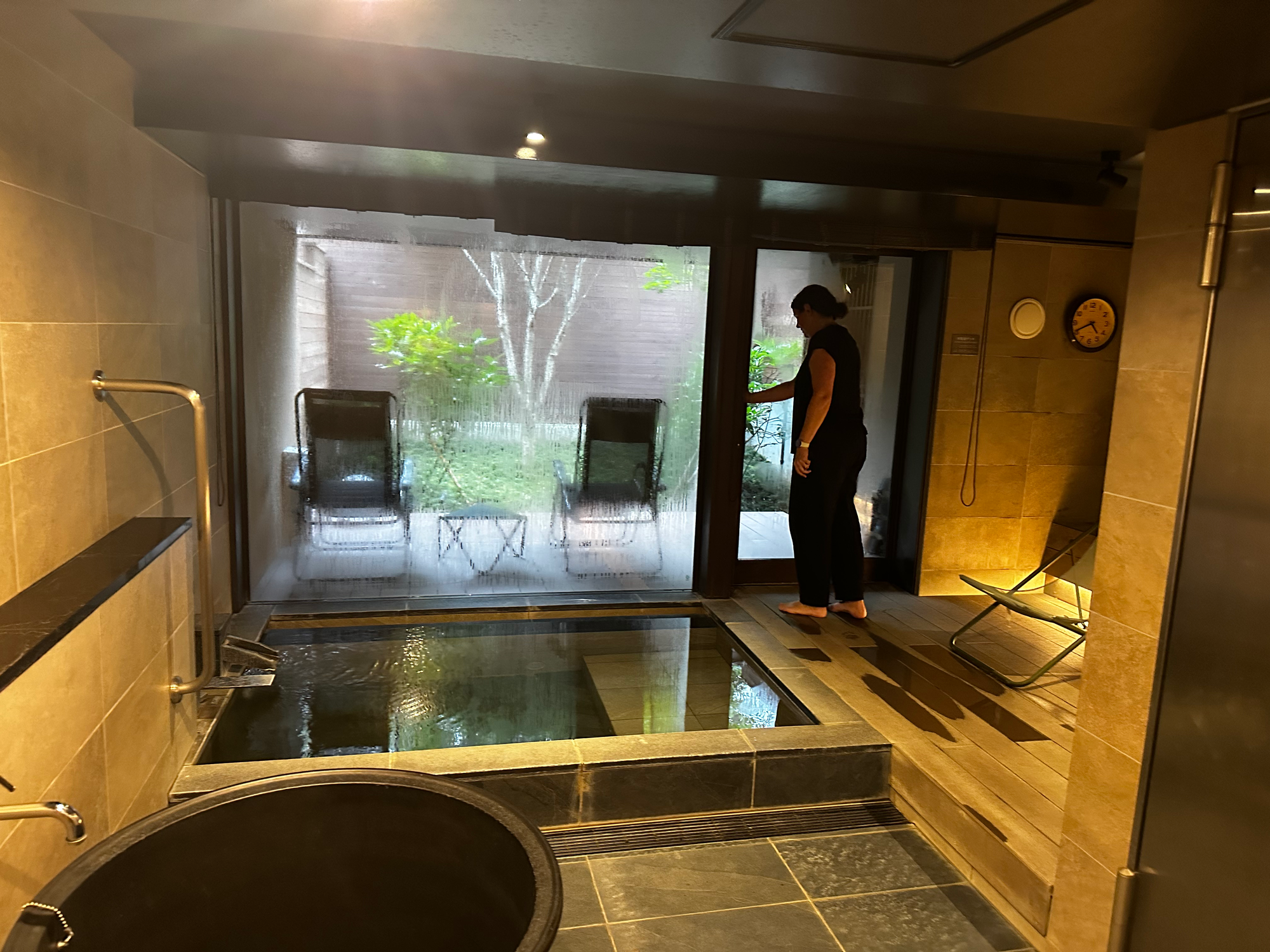
In the basement was our own hot-spring onsen, a sauna and a traditional Japanese plunge bath. Even down here, the room opened onto a small terrace and a beautifully manicured Japanese garden.
It was all very zen.
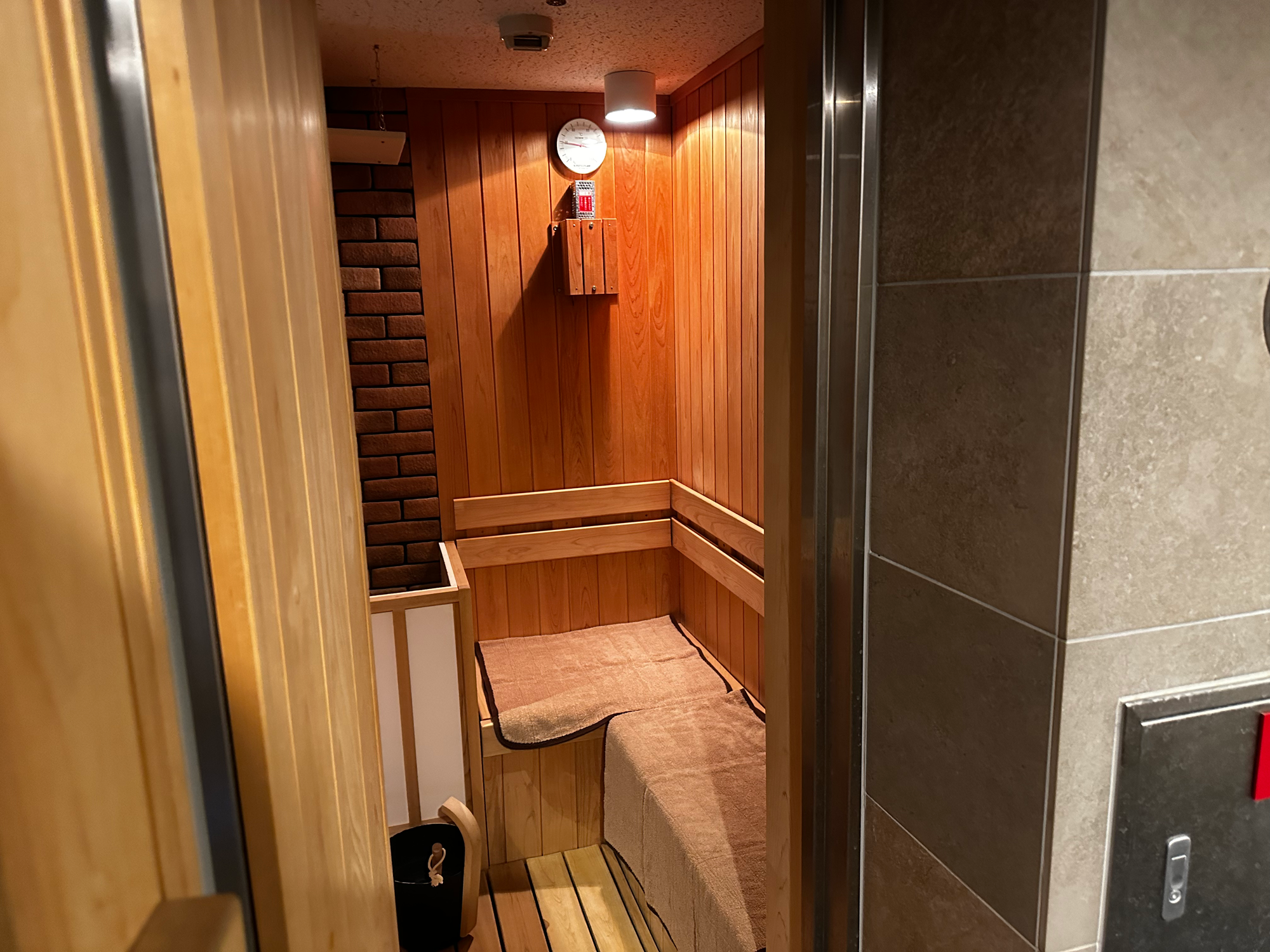
We wasted no time getting into the onsen. While we soaked, the sauna was heating up, so we gave that a go too. Charlie had his first-ever sauna, although at only 60 degrees, it was a bit of a wimp’s one.
You’ve got to start somewhere.
Erin’s Roosters were playing in the NRL grand final, and I’d managed to get a VPN working on the laptop so we could watch it live. All we needed now was dinner and a couple of beers.
The problem is, there’s not much happening in Togendai, and what little there is seems to have shut up shop for the night.
The hotel has a vending machine stocked with drinks, two-minute noodles and, unexpectedly, some A-grade wagyu that actually looks pretty good. Unfortunately, every time I try to use it, the screen goes white before eventually informing me, “We are under maintenance.”
We had our own private onsen, sauna and Japanese garden, but apparently buying a packet of noodles was too much to ask.
With everyone getting hungry and still no beers for the grand final, I decided to head out and find something. Our old friend Lawson was the best bet, although the nearest one was about half an hour back down the mountain by bus.
So off I went.
I stocked up on the adult edition of ramen for Erin and I, some two-minute noodles for the boys (which I honestly think they prefer anyway), and a couple of beers.
By the time I made it back to the hotel, the game was already at half-time.
We had dinner, we had beers, and the Roosters clinched the Grand Final by just one point.
Cock-a-doodle-dooooooo!
The next day, Fuji was still nowhere to be seen, so Erin, Charlie and I headed down to the waterfront to catch a pirate ship across Lake Ashi to Motohakone.
If you’re wondering where Oli is, he decided not to come.
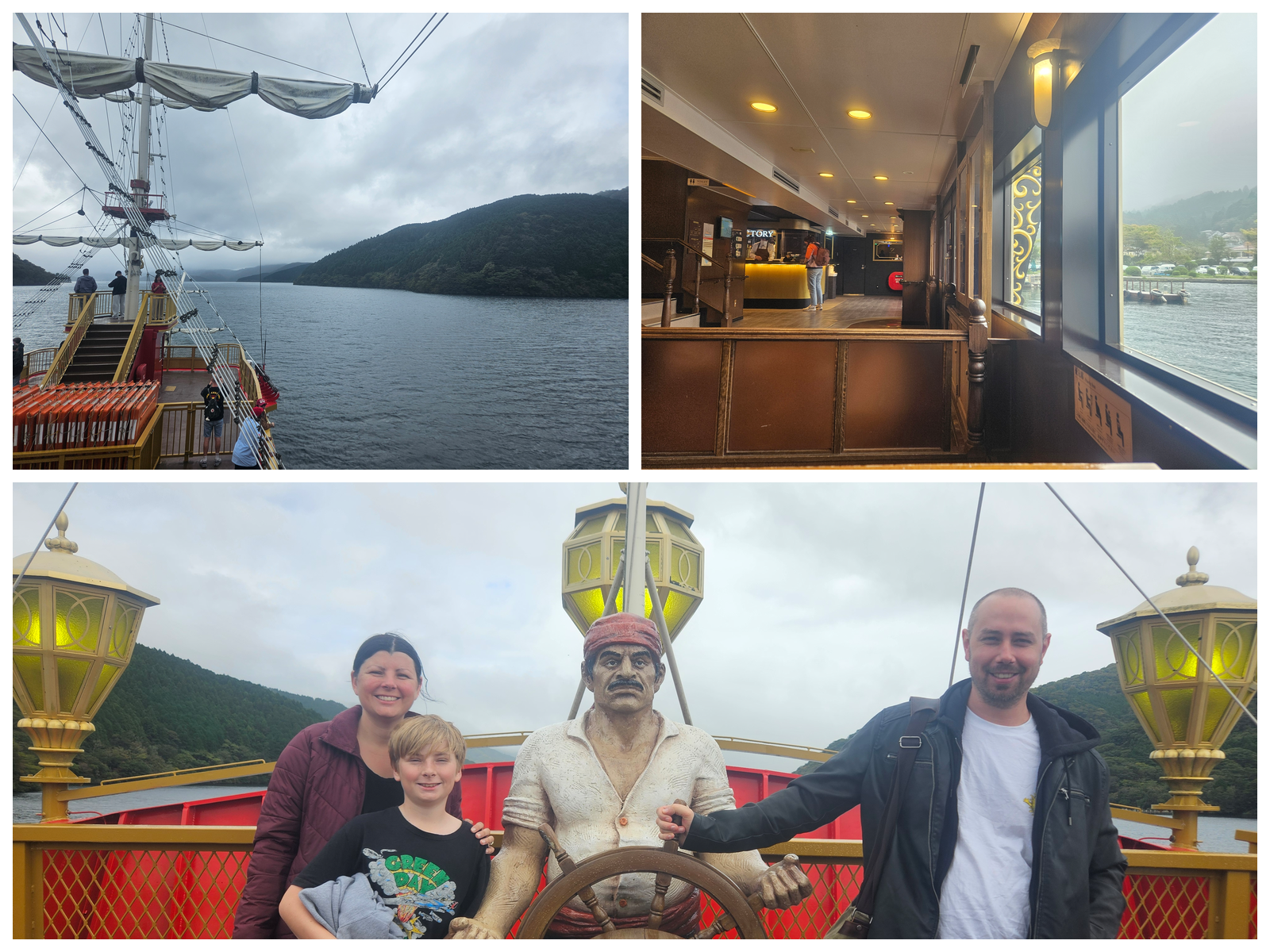
The pirate ships are pretty impressive, although a little nicer than anything I imagine real pirates would have been sailing around in.
There were several of them too, which raises an interesting question. How exactly did an entire fleet of pirate ships end up on a landlocked lake surrounded by mountains?
But let’s not dwell on that.
The crossing itself was great, and before long we arrived in Motohakone, a pretty little town sitting on the edge of the lake.
It’s a quiet place, although I can’t help feeling tourism has ruined the atmosphere a little. I imagine at some point in its history this was a sleepy little fishing village, with people going about their day beside the lake.
Now, the restaurants and shops seem to spend much of their time waiting for the next boatload of tourists to arrive.
It feels like those little islands in the Pacific where a cruise ship turns up, everyone pours off for a few hours, then disappears again. Maybe the locals love it, I don’t know, but I can’t help thinking it takes something away from the place.
And to be fair, we were doing our bit to ruin it too.
We spent a while stooging around the little shops and decided to try some dango, Japanese dumplings served on a stick. We went for the soy-basted ones.
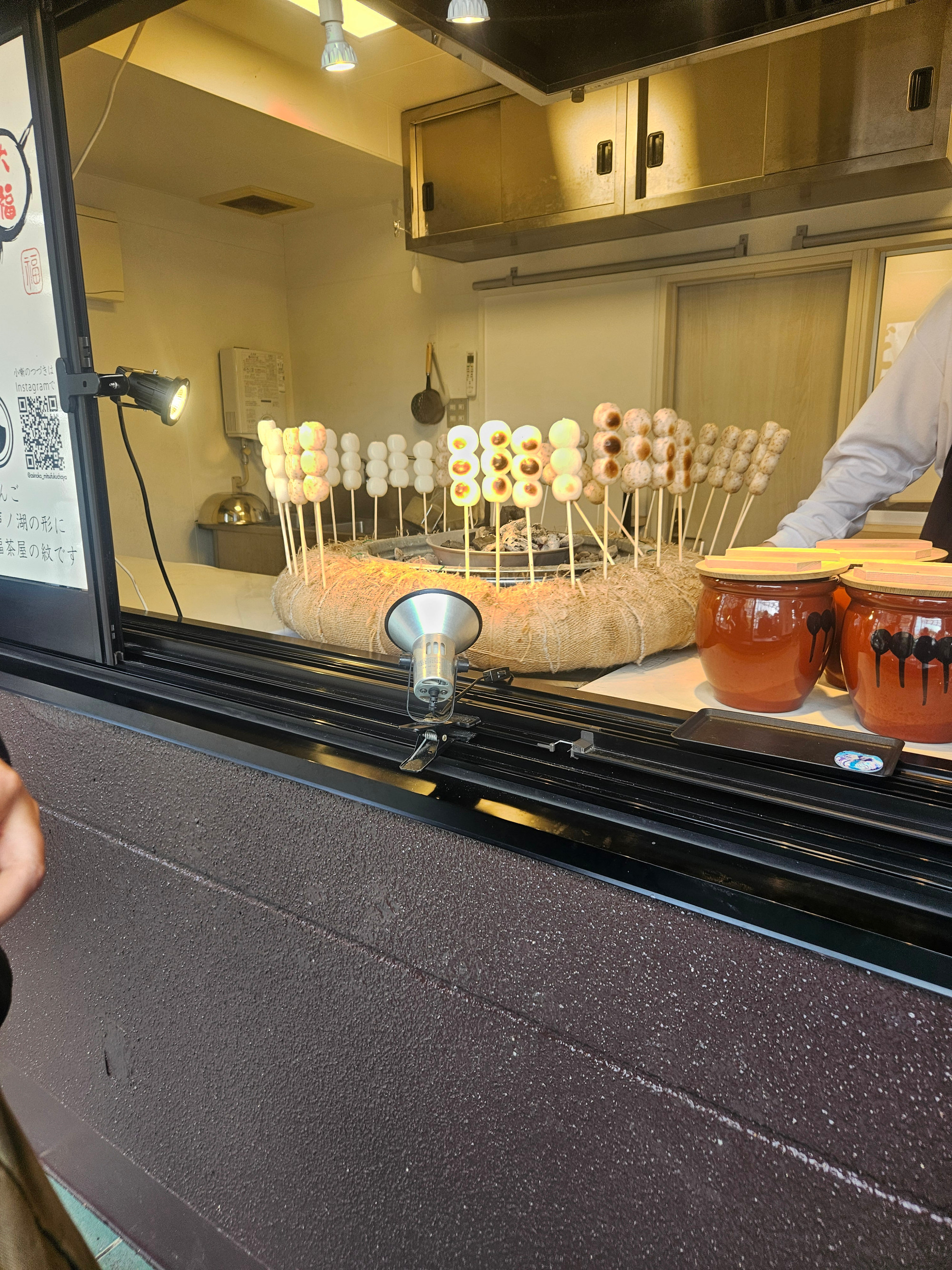
They were doughy and a little sweet, almost like someone had made damper and covered it in soy sauce.
Charlie wasn’t particularly impressed, which is surprising considering he’s the only person in our family who’ll happily drink soy sauce straight from the bottle. Erin and I could take them or leave them.
Not terrible, but nothing to write home about.
Lunch, however, was a different story.
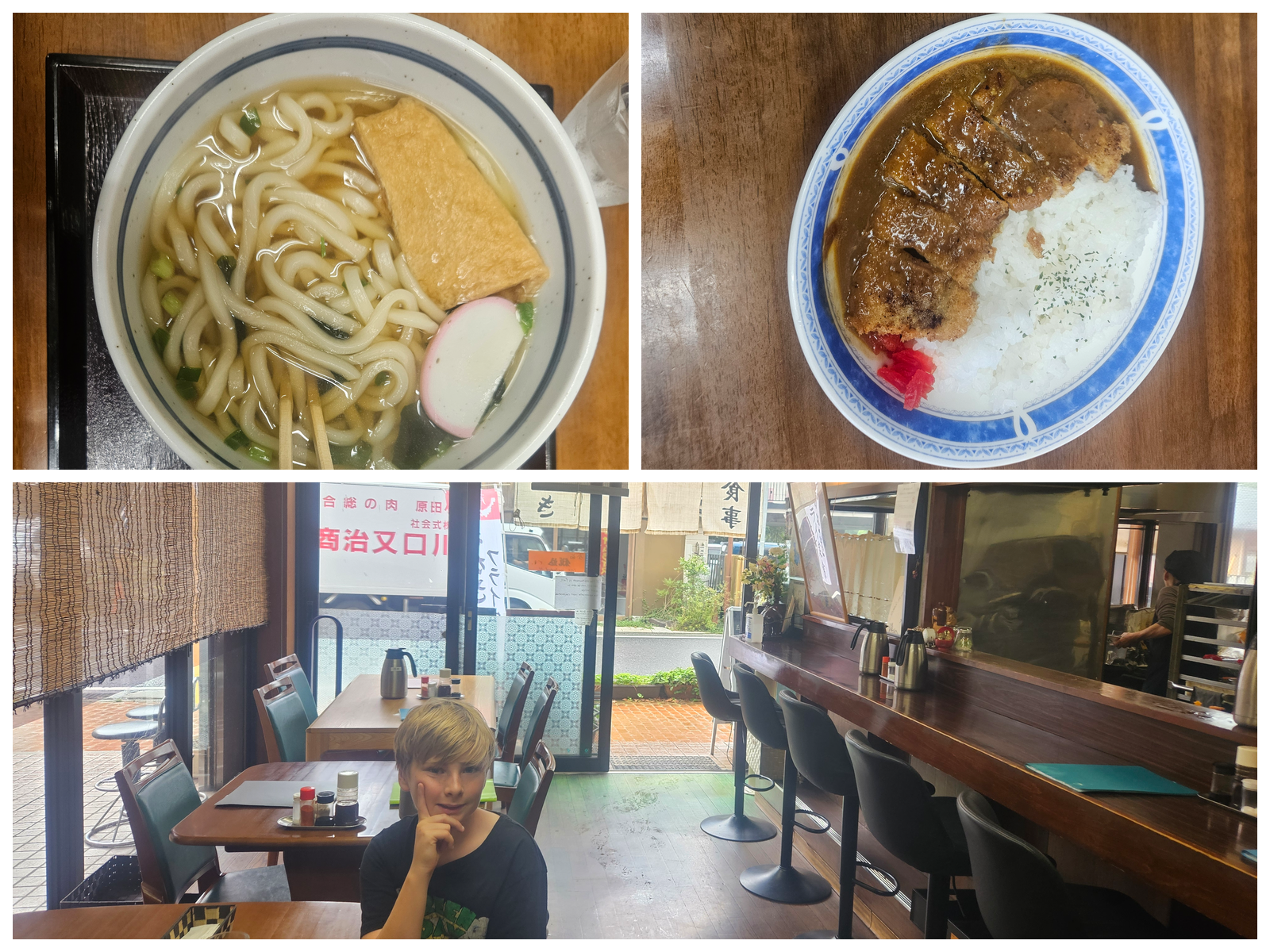
We found a tiny restaurant where two elderly Japanese ladies were doing the cooking. Neither spoke much English, but by now we’ve become pretty good at ordering food without actually speaking the language.
Point at the menu, hold up as many fingers as you want, and the food appears shortly after.
Charlie and I ordered katsu curry, while Erin went for udon soup. It was all very tasty, and Charlie rated it as his best meal so far.
After lunch, we caught a bus up the mountain to Gora Station, where we’d board the Hakone Tozan Cable Car to take us up to the ropeway.
Now, the cable car is definitely not my kind of transport.
We were lucky enough to get on early and secure a seat, but plenty of others weren’t so fortunate. People kept piling into these tiny carriages until you thought there couldn’t possibly be room for anyone else.
Then they’d herd another bunch in.
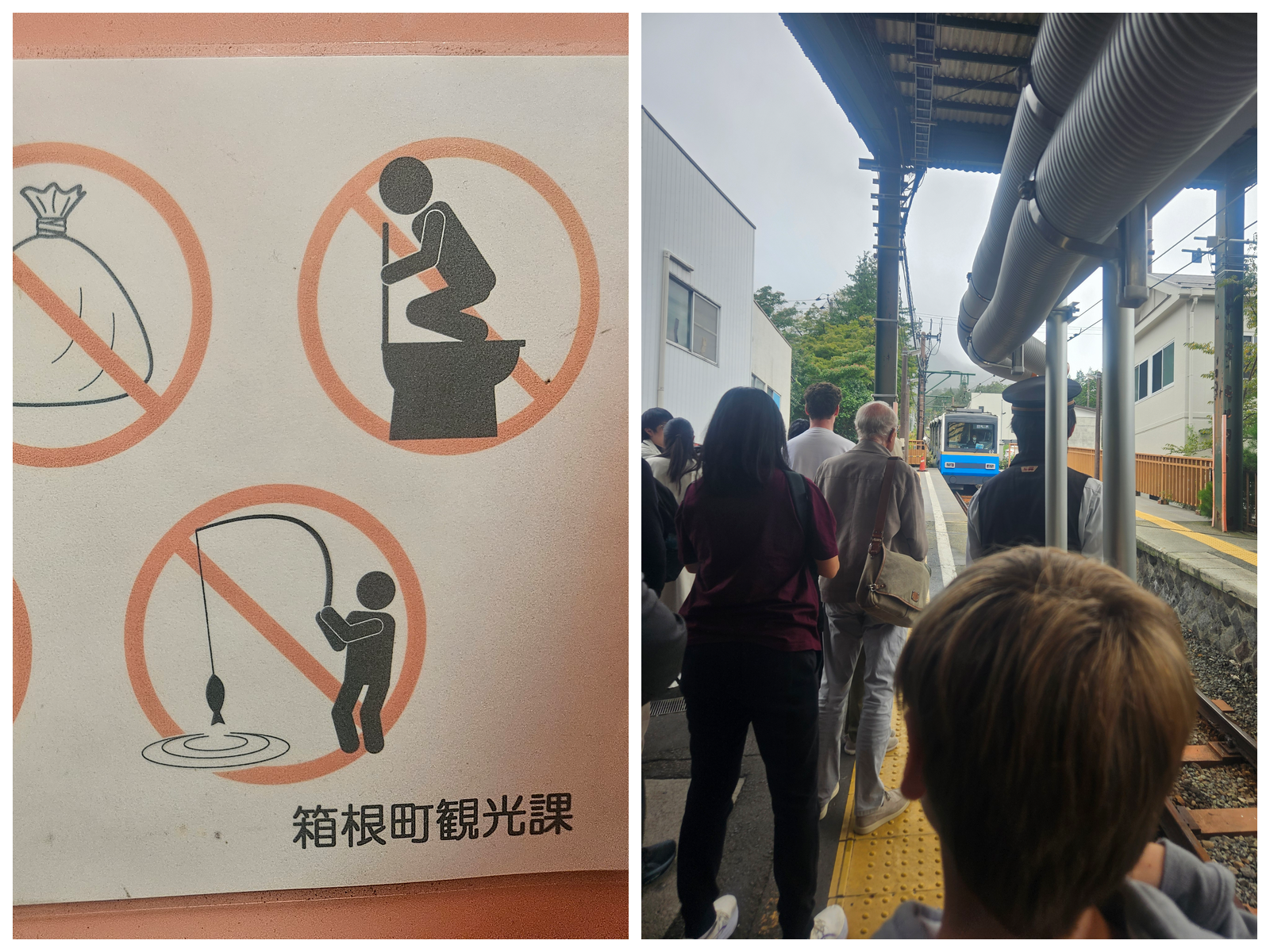
There wasn’t any air conditioning on board, either. At the stations, they’d positioned portable air conditioners to blow cool air through the little windows, which was lovely while you were sitting there.
Once we got moving, you were on your own.
And for all that discomfort, there wasn’t even much to look at. Just walls of bushes on either side as we slowly crawled up the mountain.
Not exactly the scenic mountain journey we’d imagined. I wouldn’t recommend it.
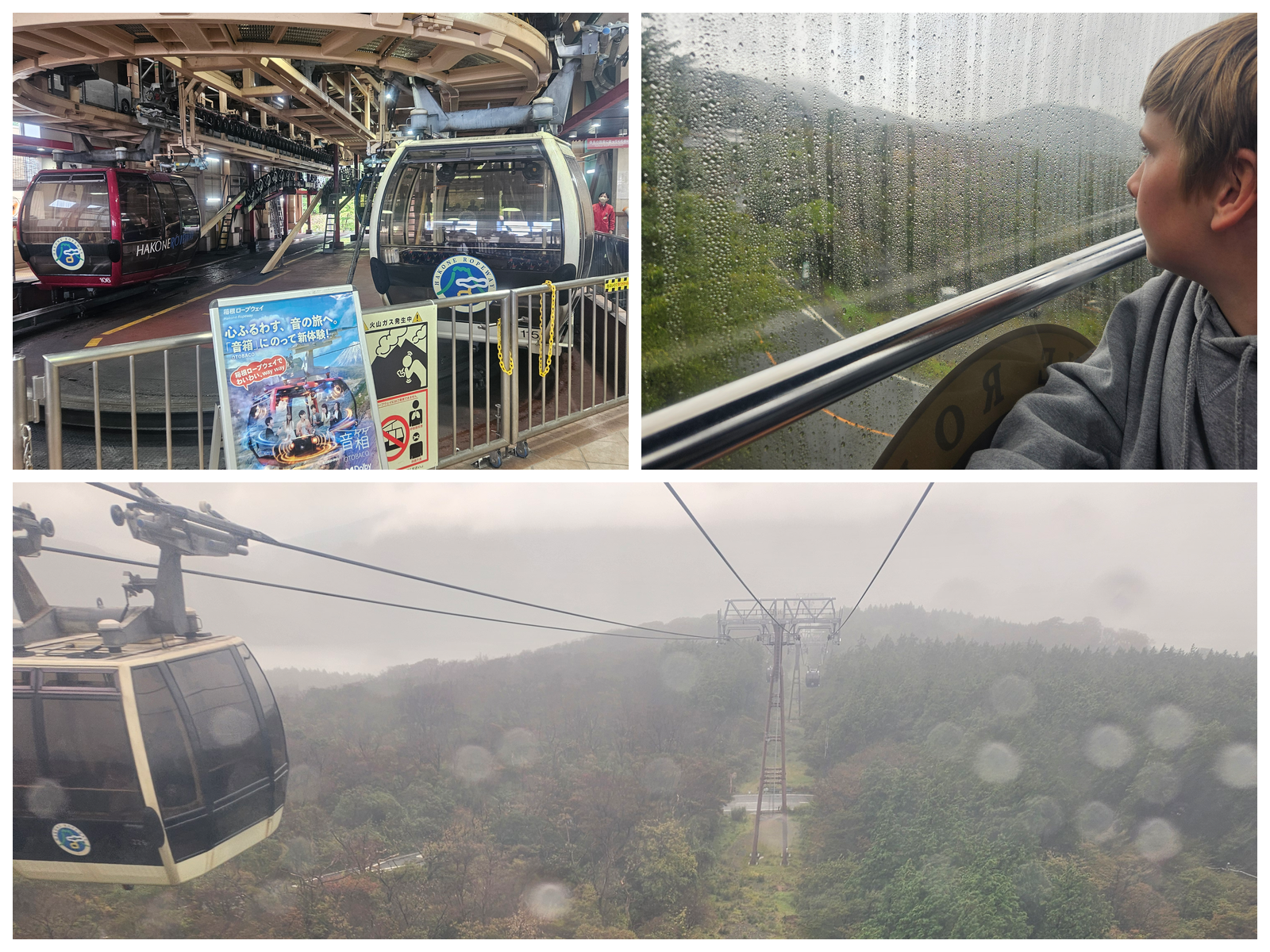
Thankfully, the ropeway was a much better experience. Everyone had a seat, a decent view out the windows and plenty of room to enjoy the scenery.
Or at least they would have, if there had been any scenery to see.
This was supposed to be our chance to finally get a good look at Mount Fuji.
Instead, we went straight into the clouds.
And I’m not talking about the occasional cloud drifting past. In some sections, we were in a complete whiteout. We couldn’t see a metre in front of us, let alone a mountain somewhere in the distance.
We also passed over Owakudani, a volcanic area where steam and pong escape from vents in the mountainside, producing that unmistakable rotten-egg smell.
Which finally explained who’d been farting earlier.
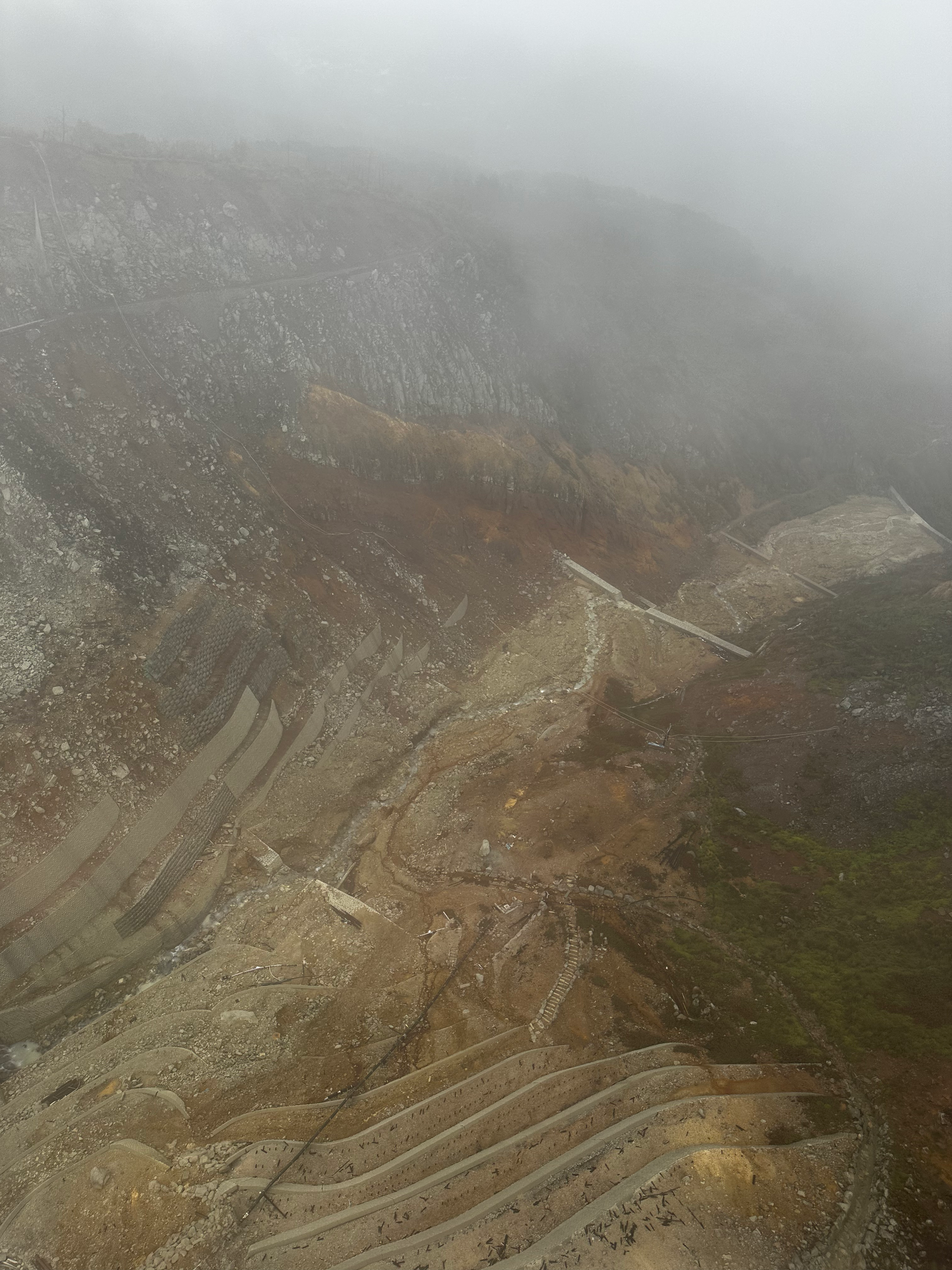
Man, I feel sorry for the poor souls who have to work down there every day. It brought back memories of Rotorua from our New Zealand trip.
The ropeway eventually brought us back down into Togendai, completing our loop around the lake and over the mountains.
Still no Fuji.
Comments ()