Tokyo: The City That Moves Together
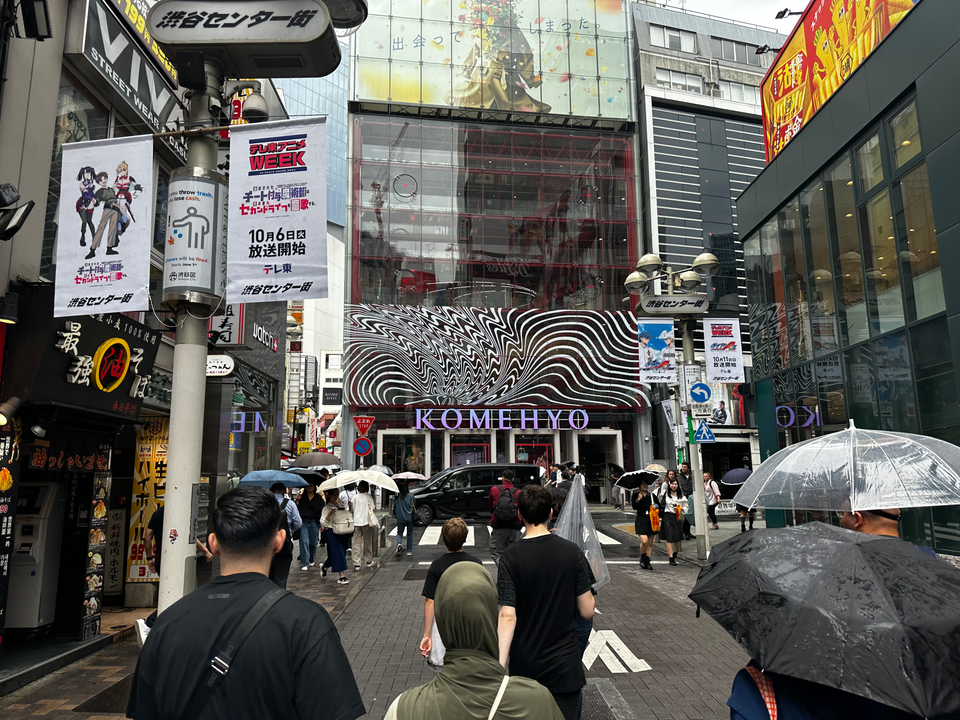
For a city that seemingly never sleeps, I actually slept pretty well.
The boys were still asleep, so Erin and I headed out for a short stroll to get our bearings. Within fifty metres of the hotel, we’d already found our first 7-Eleven.
Breakfast sorted, and we hadn’t even crossed a road yet.
We’ve crammed so much into the last three days that my memory is already struggling to put everything in the right order. So you’ll get the summarised version, along with a few things that have caught my attention.
First, the konbini.
You quickly become familiar with three names: Lawson, 7-Eleven and FamilyMart. To my untrained eye, they all seem to offer much the same thing, which is just about everything you could need squeezed into a surprisingly small shop.
These aren’t your average convenience stores, either. They’re stocked with fresh ready meals, salads, hot food, vitamin drinks, and plenty of other things I haven’t yet identified but will probably eat anyway.
For my first konbini breakfast, I started with two vitamin shots, one C and one B, on the recommendation of friends who’d recently returned from Japan.
Anyone who knows me knows I love a fad, so it didn’t take much convincing before I was knocking them back.
It’s easy to see how these places become part of your daily routine. You wander in, find something tasty, and you’re fed.
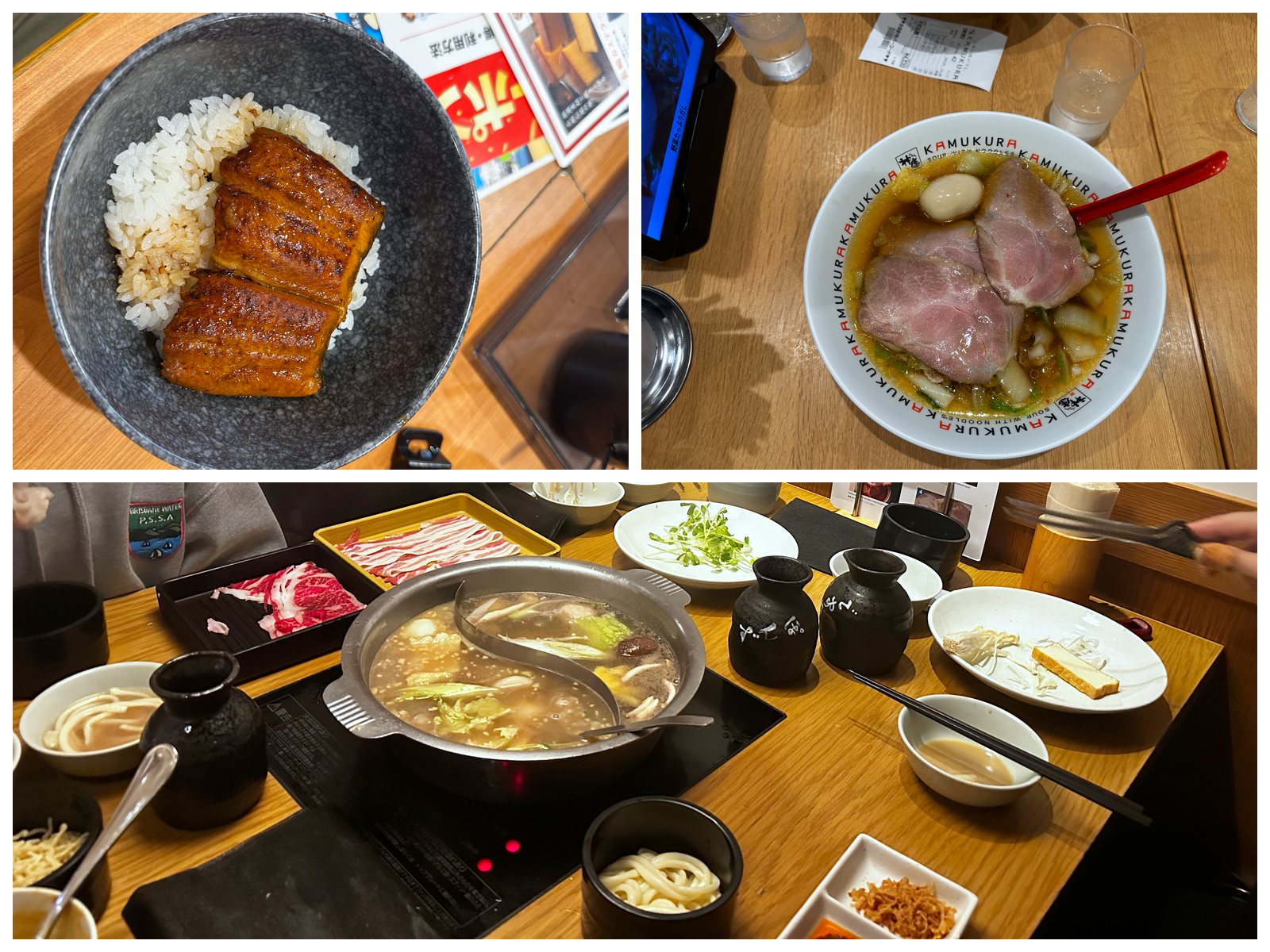
Between the konbini are cafes and restaurants. Then you look up and find a few more.
Food isn’t restricted to ground level here. Some buildings have places to eat stacked several storeys high. You find somewhere that looks good, glance upstairs, and discover another option. Then another.
After a while, you start wondering whether anyone bothers cooking at home.
I’m sure plenty do, but when you look at the size of some of the apartments and the amount of good, reasonably priced food available seemingly everywhere, you can understand the appeal.
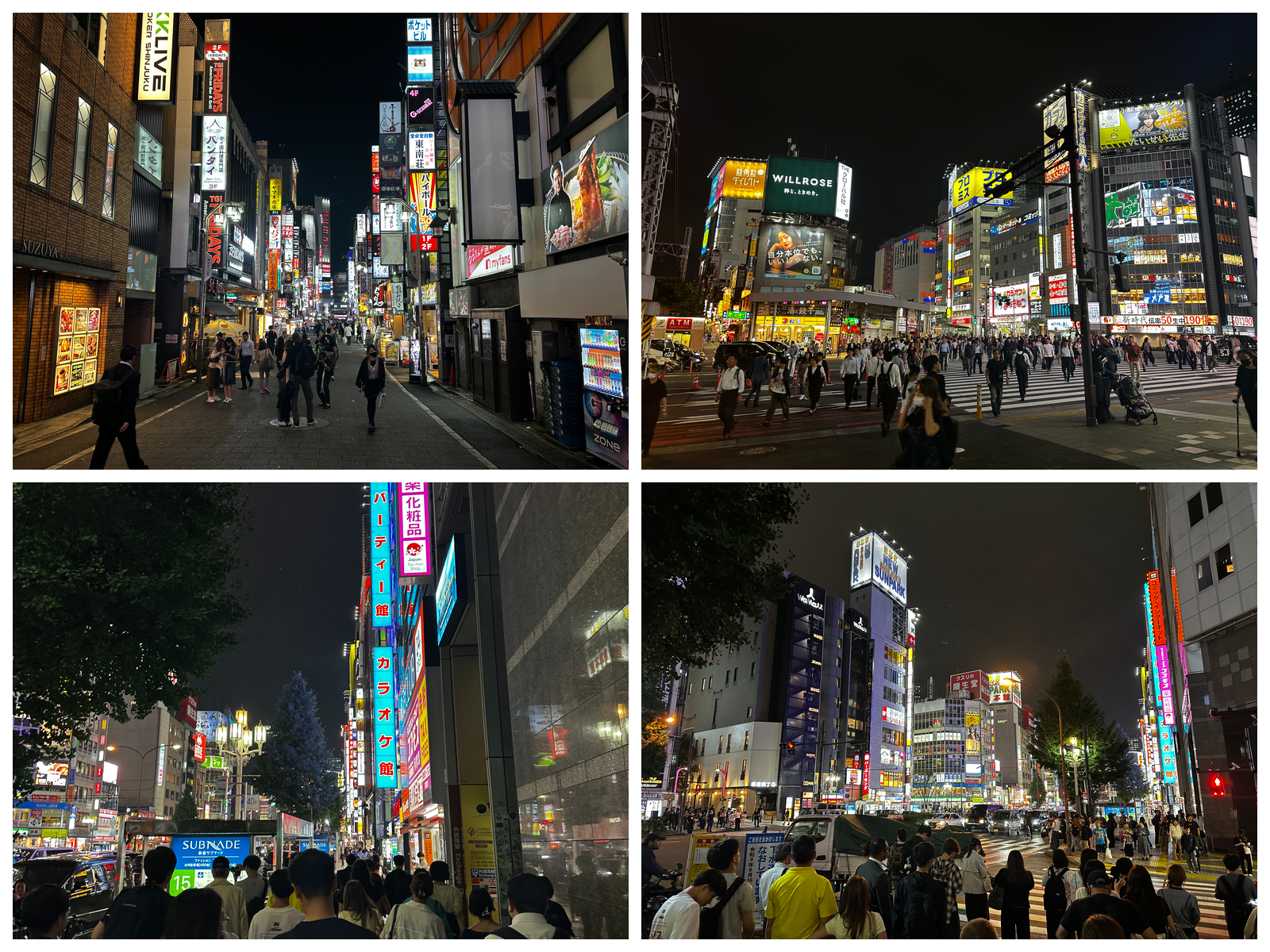
Our little hotel room is already doing a respectable job of fitting four people and their luggage. If your kitchen at home isn’t much bigger, letting someone else store the groceries, cook dinner and handle the washing-up seems like a fairly sensible arrangement.
Back home, you plan dinner, check the fridge, discover you’re missing three things, and head to the shops. Here, I feel like I could walk out the front door and have dinner sorted before I’d finished deciding what I wanted.
For someone whose holiday plans tend to revolve around the next meal, it’s a system I’m quite happy to participate in.
Then there’s getting around.
Charlie’s first Pokémon Centre was in Shibuya, and we’re staying in Shinjuku, so his shopping mission was also our introduction to Tokyo’s public transport.
First, we needed Suica cards, the local equivalent of our Opal cards back home.
We’d been told the airport was a good place to pick up the tourist Welcome Suica cards.
Useful advice.
We forgot.
So, before Charlie could begin his Pokémon shopping, we had a twenty-minute walk to the station to sort ourselves out.
We weren’t complaining. It gave us a chance to check out the streets, and that’s when I started noticing something I hadn’t expected to spend much of my holiday thinking about.
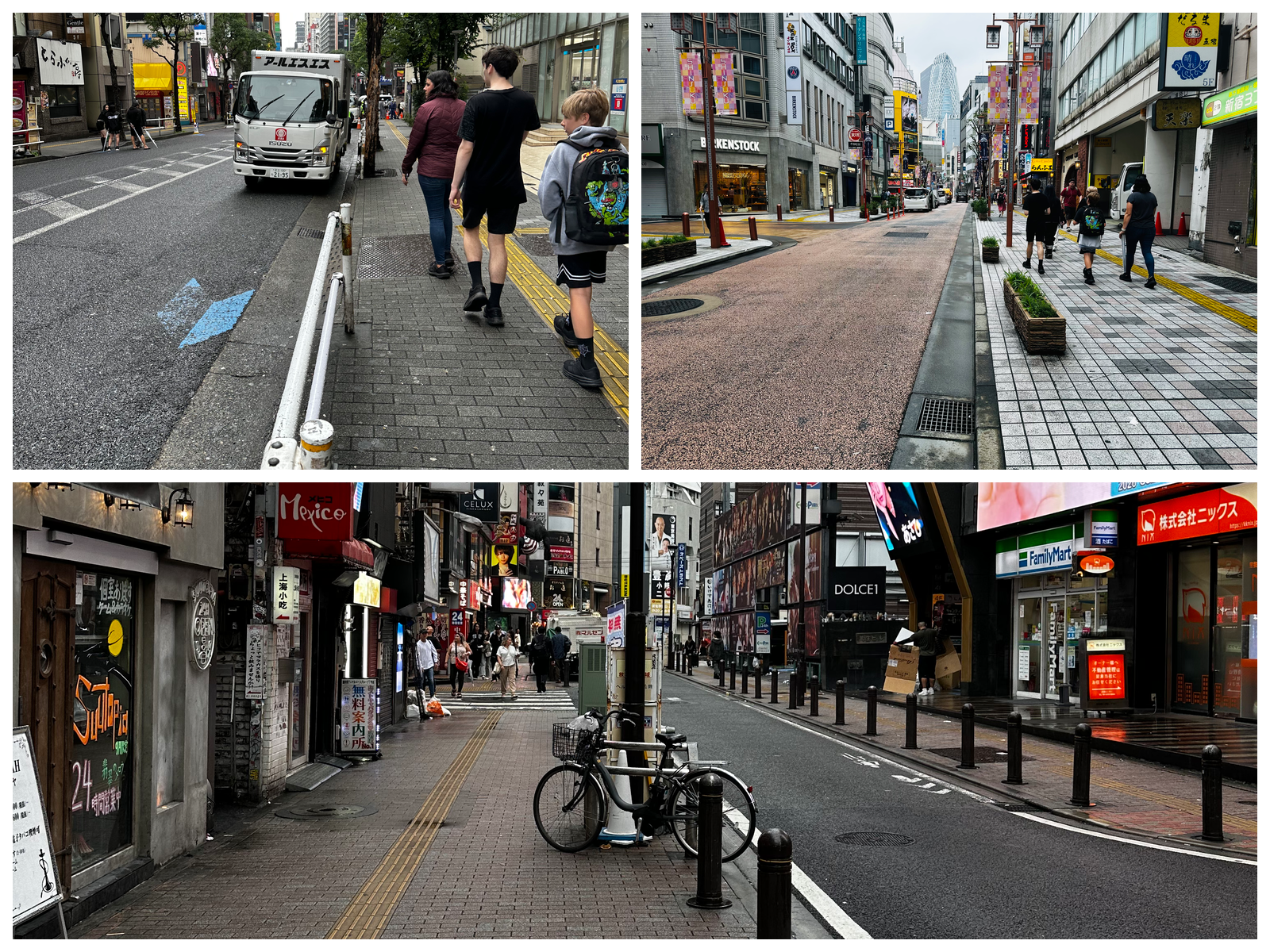
The pavement.
Once you notice the strips of bumps and grooves underfoot, you start seeing them everywhere. Along footpaths, through stations, towards crossings, and around stairs and escalators.
They’re tactile paths that help people with vision impairments get around, and they seem to connect everything. Crossings, corners, stairs, the lot.
It’s an impressive amount of planning for something most of us would walk straight over without a second thought.
Admittedly, I’ve started walking along them on purpose. They double as a surprisingly decent foot massage.
Then there are the sounds.
Bird calls, little chimes, and tunes that sound like they belong in an Atari game. You feel like you’ve unlocked an achievement just by arriving somewhere.
Congratulations. You found the escalator. Ten points.
Some of those sounds have a practical job, too. Bird calls in stations, for example, help people with vision impairments locate stairs leading towards the exits.
The people seem to have their own system as well.
Generally, keep left, leave room for someone to pass, and watch the people around you. Everyone seems to understand that we’ve all got somewhere to be, so there’s no need to make it difficult.
For a place with this many people, it feels surprisingly calm.
The footpaths are busy, but everyone seems to slot into the flow. Even the side streets we’ve been walking through have been much quieter than I expected, with very little honking and much of the traffic seemingly made up of taxis and service vehicles.
The crossings have little countdown bars, so you can see when the lights are about to change. No repeatedly stabbing a button in the hope of speeding things up.
You wait, the light changes, and everyone goes.
It’s like the whole city has rehearsed this and we’ve just turned up without reading the instructions.
Every now and then, an emergency vehicle interrupts proceedings with a siren that sounds like someone is winding it by hand. It has this old-fashioned wail that makes me check whether anyone else has started running.
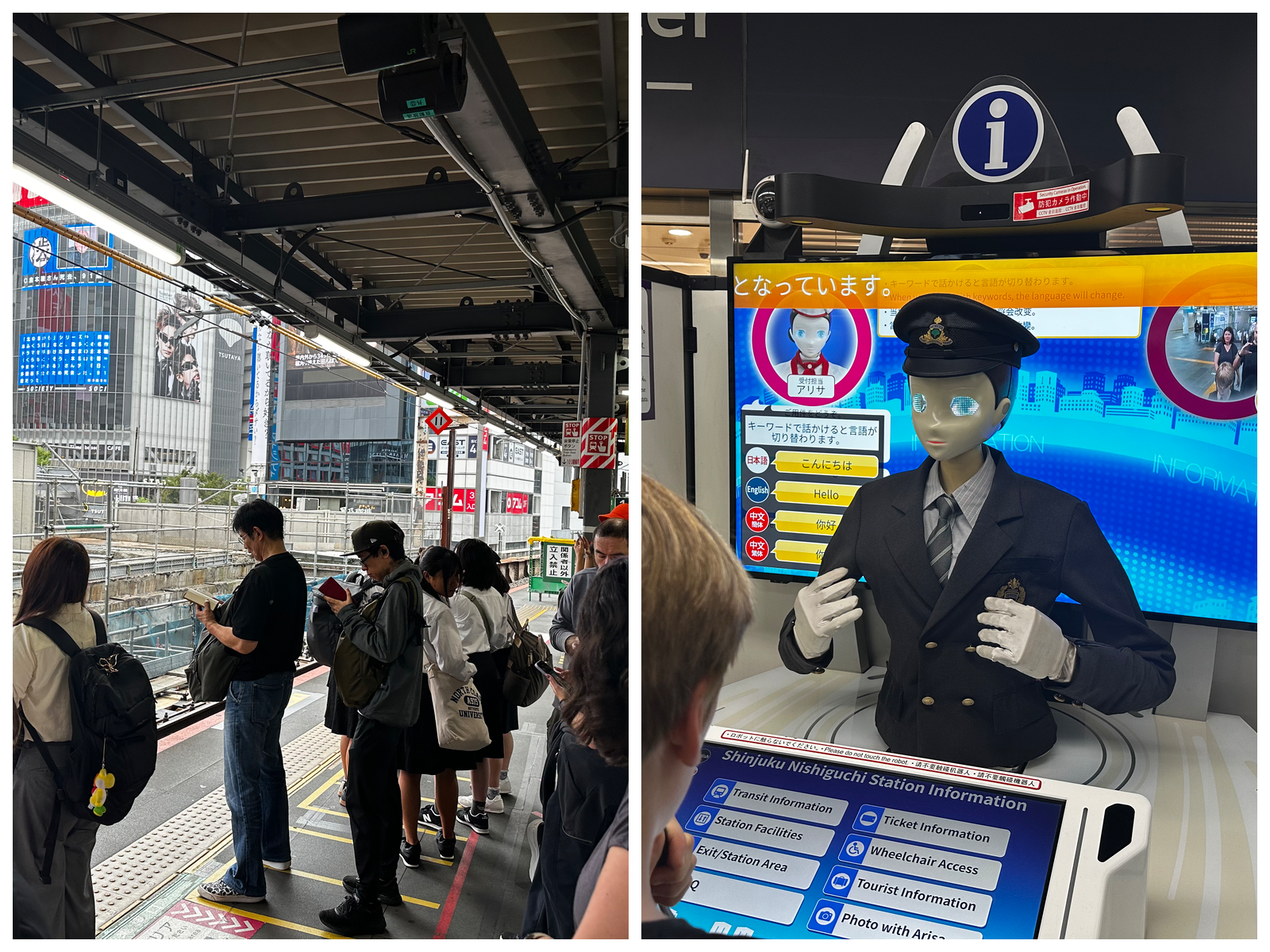
Eventually, we made it to the station information desk, where the very helpful staff got us sorted with loaded Suica cards.
We were ready to go underground.
Now, this is a city of holes.
Entrances appear in footpaths, in the sides of buildings, and underneath office blocks. Often, it’s just an unassuming stairwell you could walk straight past without realising what’s down there.
Then you descend.
Sometimes you descend again.
If you poured concrete down one of the entrances, let it set, and dug the whole thing up, I reckon you’d find a second Tokyo hanging underneath.
Depending on the route, you can wind several floors down, passing corridors that branch off towards other lines and platforms.
Even a mole would need a map down here.
We arrived at our platform, and a train appeared almost immediately. On the trips we’ve taken so far, we’ve barely had time to settle into waiting before the next one turns up.
Once again, everyone seems to know their part.
Queues form where the doors will stop, with room left for people to get off. The train arrives, the doors open, and everyone waits while the passengers file out.
Then it’s our turn.
Despite the train being more packed than any Sydney train I’ve been on, no one pushed or barged. People shifted, gaps appeared, and room was made where it was needed.
Doors closed and off we went.
Everyone moving together.
We arrived in Shibuya and followed the marked lanes off the platform, with absolutely no idea where we were in relation to anything else.
Travelling underground gets you there quickly, but you miss the landmarks that help you piece a place together. It was starting to feel like Super Mario. Down one pipe, out another, and suddenly you’re in a completely different part of the map.
Fitting, really. Except I seemed to be losing coins every time I tapped my Suica card.
Shibuya is famous for its crossing, and this end of town certainly felt busier. There seemed to be far more tourists than in Shinjuku, but somehow everyone still managed to move around without turning it into a contact sport.
Eventually, we made it to the Pokémon Centre.
Apparently, so had everyone else.
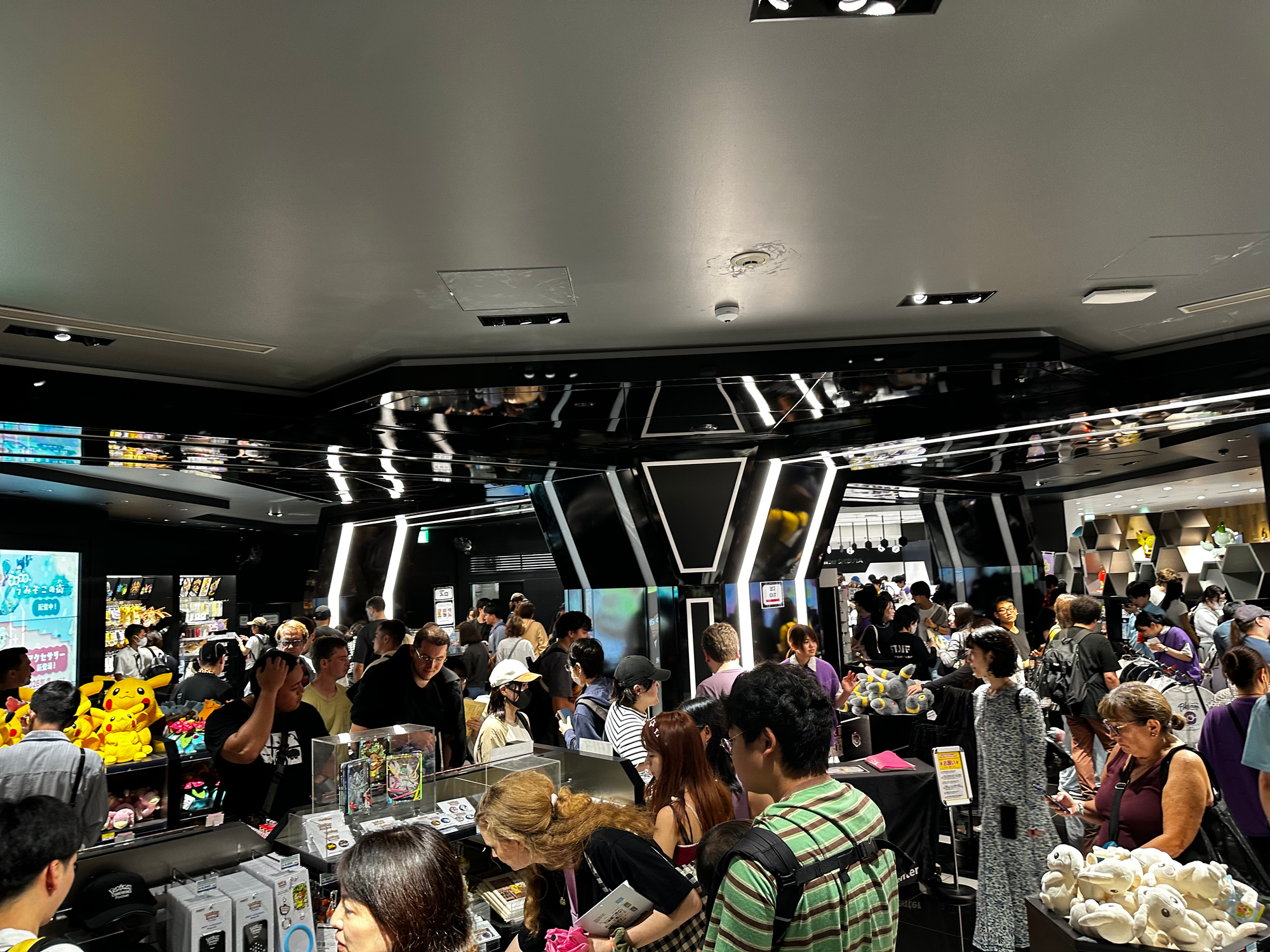
The place was packed. Charlie and Oli were in heaven. I mostly tried to work out where I could stand without getting in anyone’s way or my own.
By lunchtime, we were stooging around Shibuya trying to decide what to eat.
Charlie had no such difficulty. He’d found a small takeaway window serving that authentic Japanese delicacy, the halal beef burger.
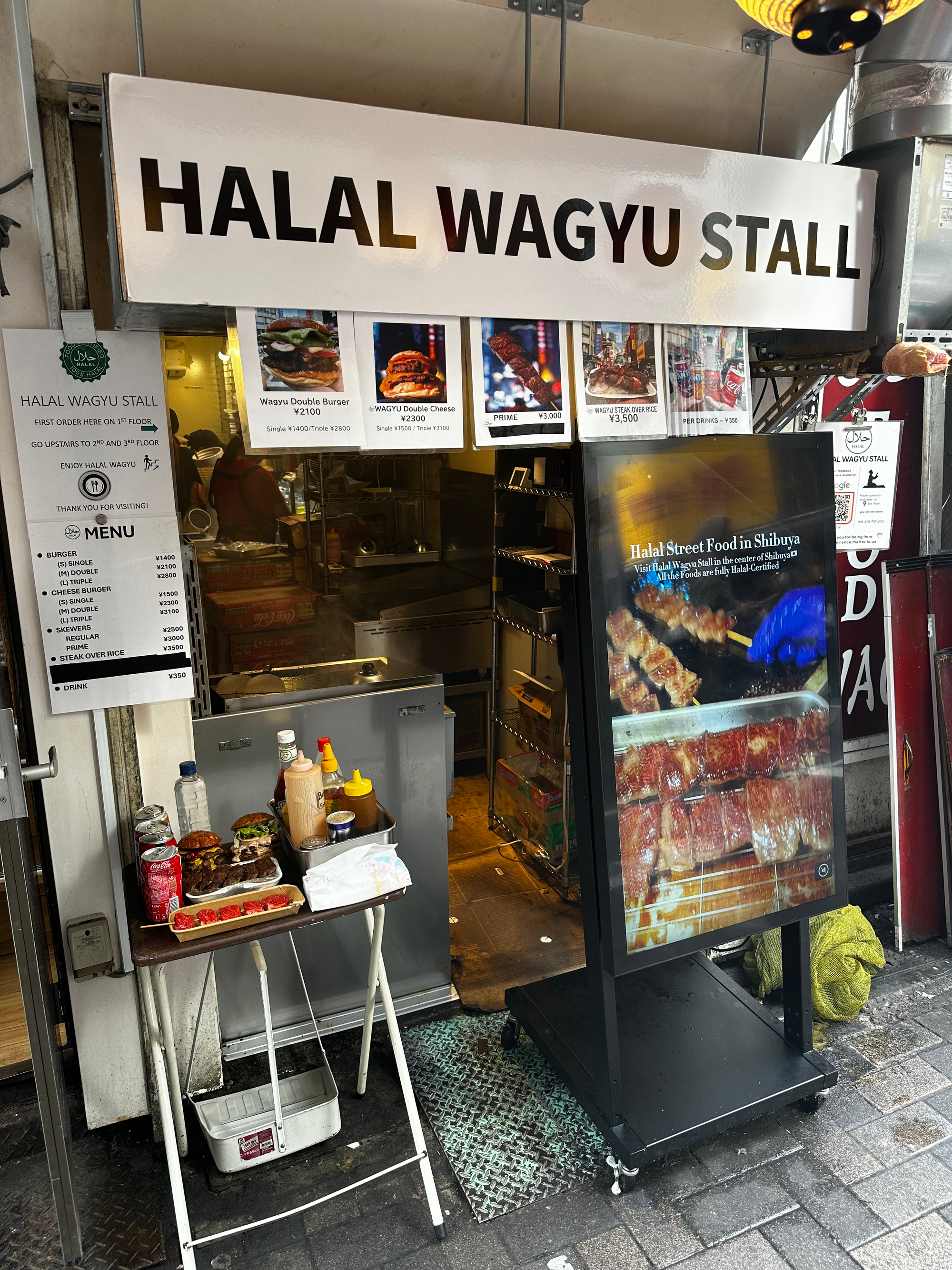
Lunch sorted. For him, anyway.
The rest of us were still studying pictures of food, trying to work out what everything was and whether we wanted it. Every time something looked promising, another place appeared with another menu.
Earlier, I’d been admiring how much choice there was.
I was beginning to see the flaw.
Eventually, we fed everyone and headed back to the hotel for a quick pit stop and rest before heading out again for dinner.
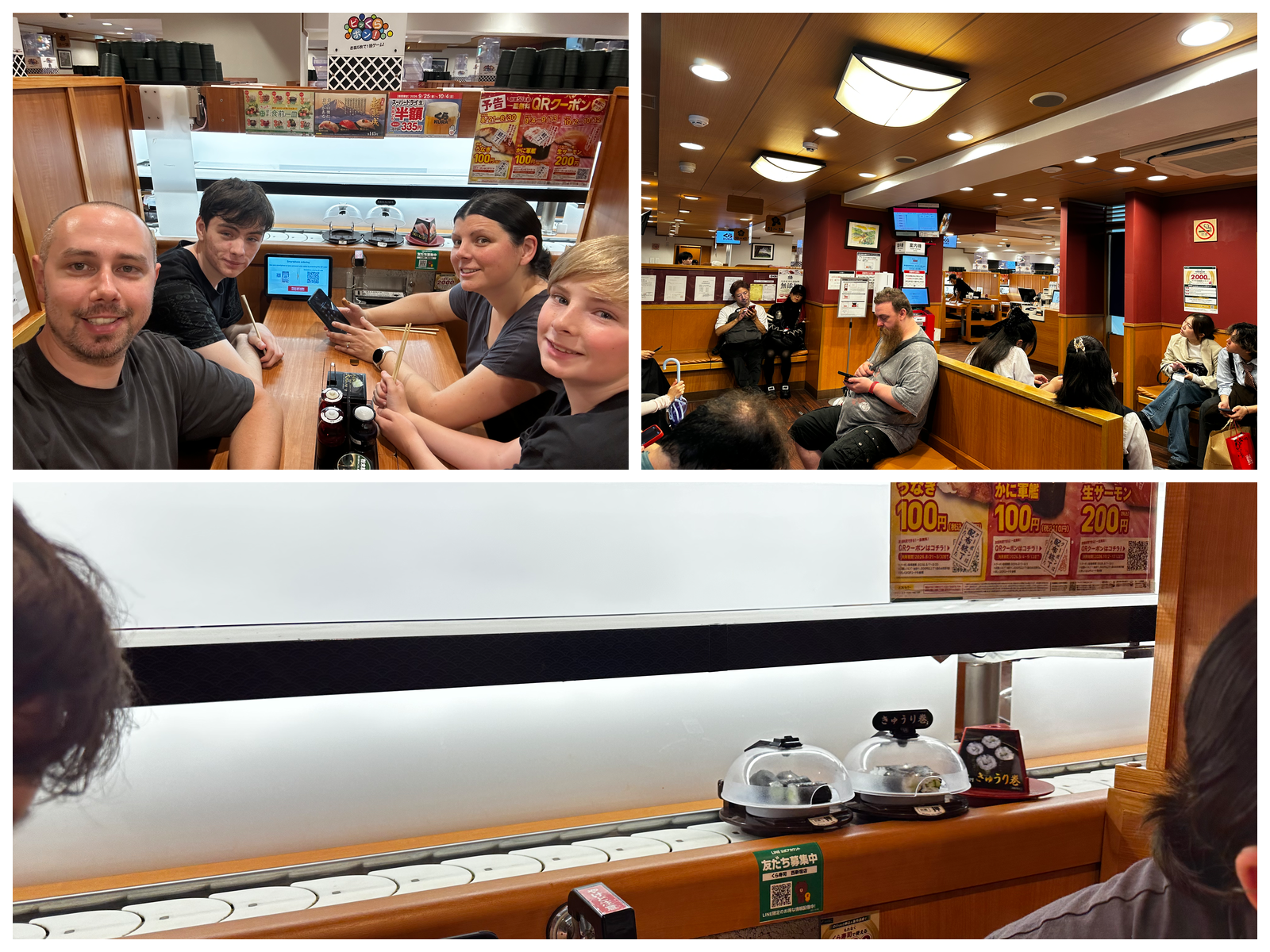
This time, sushi.
We ended up at Kura Sushi, which is a sushi train, although it feels like someone looked at a normal sushi train and decided there were still too many humans involved.
The place was packed, yet there appeared to be only one person working out the front, mostly cleaning and resetting tables. Almost everything else was automated.
You ordered on an iPad at the table and, a minute or so later, your food came flying down a conveyor belt and stopped directly in front of you.
Even clearing the table had been thought through. There was a slot beside us where you fed in your empty plates, and every few dishes gave you a chance to win a prize.
They’d somehow managed to make children enthusiastic about doing the dishes.
After dinner, we found a six-storey building full of claw machines, where it wasn’t just children having a go. Plenty of businessmen in suits looked equally giddy at the prospect of winning a fluffy toy.
By the time we made it back to the hotel, we’d done enough walking for one day.
The next morning, it was raining.
The boys decided to head out on their own and do some exploring, while Erin and I took things a little slower around the hotel.
Oli’s continued refusal to buy an eSIM made this slightly more interesting.
We’d watch the boys disappear into Tokyo, then every now and again Oli’s location would suddenly update when he connected to some free Wi-Fi somewhere.
Then he’d disappear again.
For someone who refuses to pay for mobile data, he seems remarkably capable of finding every free internet connection in Japan.
Eventually everyone reappeared, and we headed to Sunshine City together, about half an hour away by train.
The rain made an indoor shopping centre sound pretty appealing, and Sunshine City had enough inside it to keep us occupied for most of the afternoon. There was shopping, food, a museum and even an aquarium.
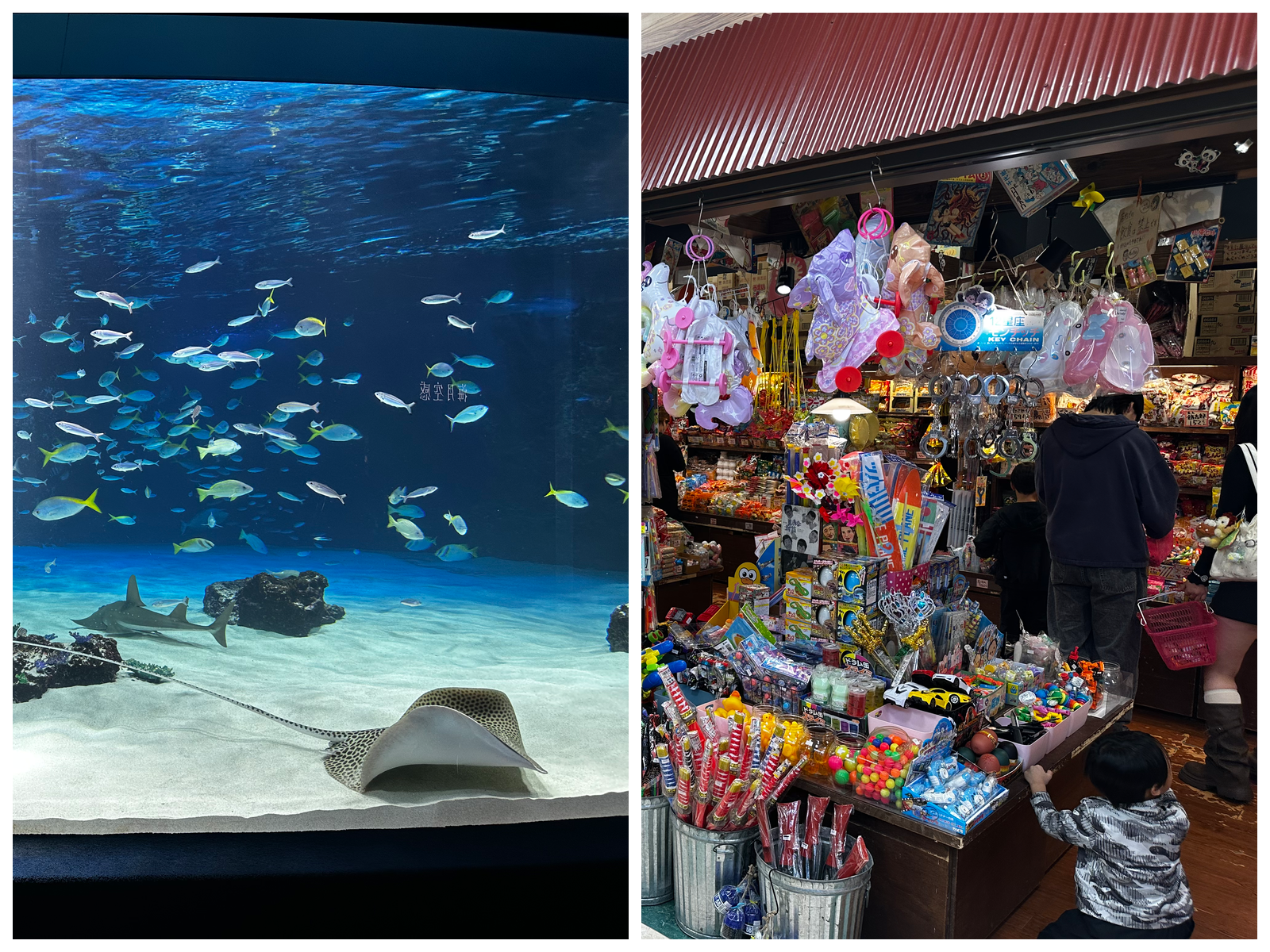
The rain had also made me notice something else about Tokyo.
There don’t seem to be many awnings or eaves over the footpaths, and I have a theory this is deliberate.
No awnings means nowhere to congregate. Nowhere to congregate means everyone keeps moving.
I have absolutely nothing to support this theory, but given how efficiently everything else in Tokyo seems designed to keep people flowing, I’m sticking with it.
By the time we made it back to Shinjuku, the trains no longer felt like an event. We still had very little idea where we were most of the time, but we’d learned to trust Google, tap the Suica, and head down whatever hole it pointed us towards.
The next morning, Charlie and Oli headed off on their own again.
Erin and I had a slightly less ambitious mission.
I was out of clean T-shirts.
So while the boys disappeared into Tokyo, we went looking for clothes and wandered around without much of a plan.
By lunchtime we’d ended up in another sushi restaurant, ordering from a screen and waiting for food to appear on a conveyor belt.
Later in the afternoon we headed to the botanical gardens. After three days of stations, tunnels, crossings and buildings stacked on top of one another, it was strange to suddenly find ourselves surrounded by trees and open space.
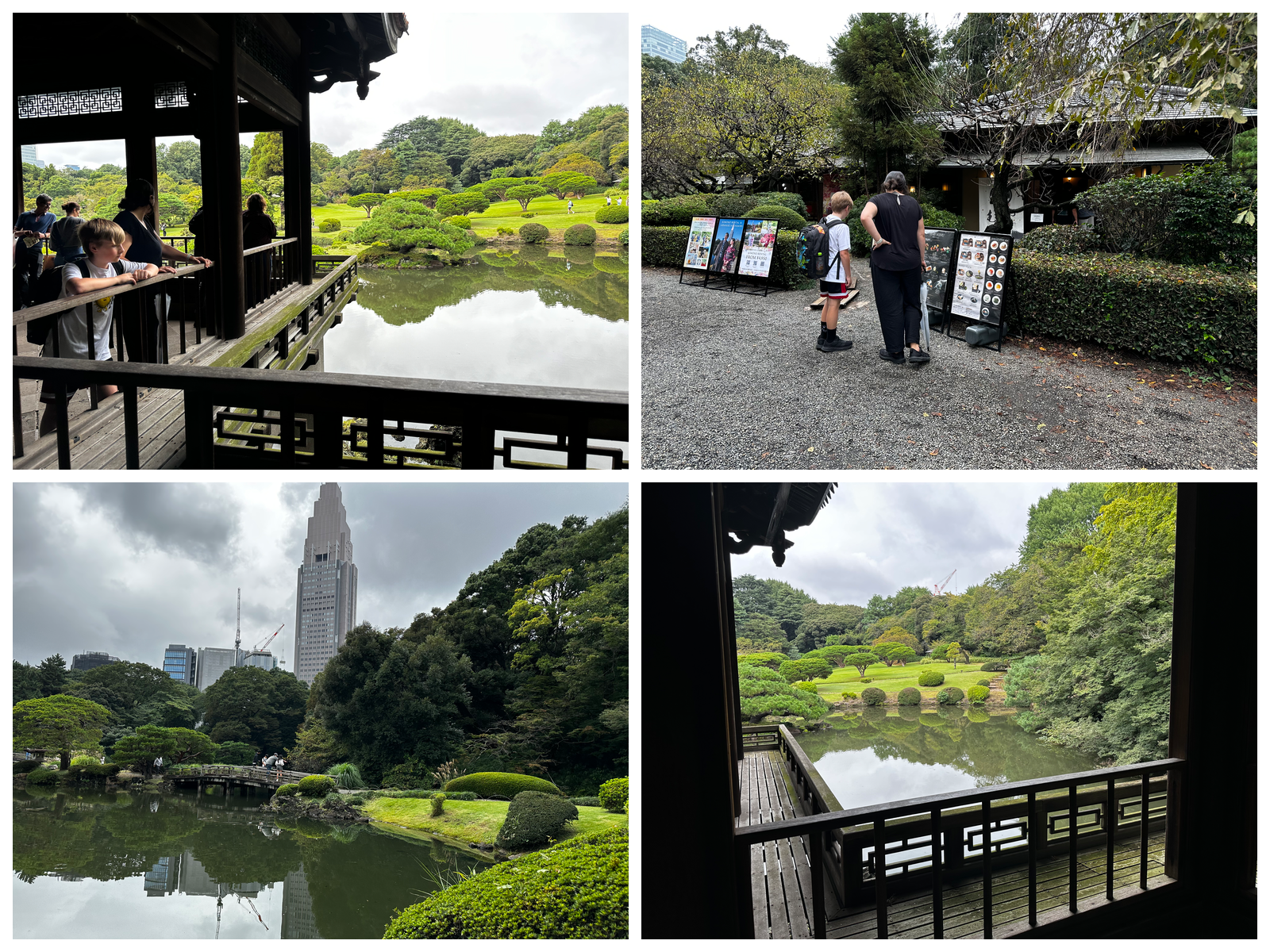
In the evening we went looking for ramen.
There were several spice levels to choose from, so naturally I chose super spicy.
It lived up to the name.
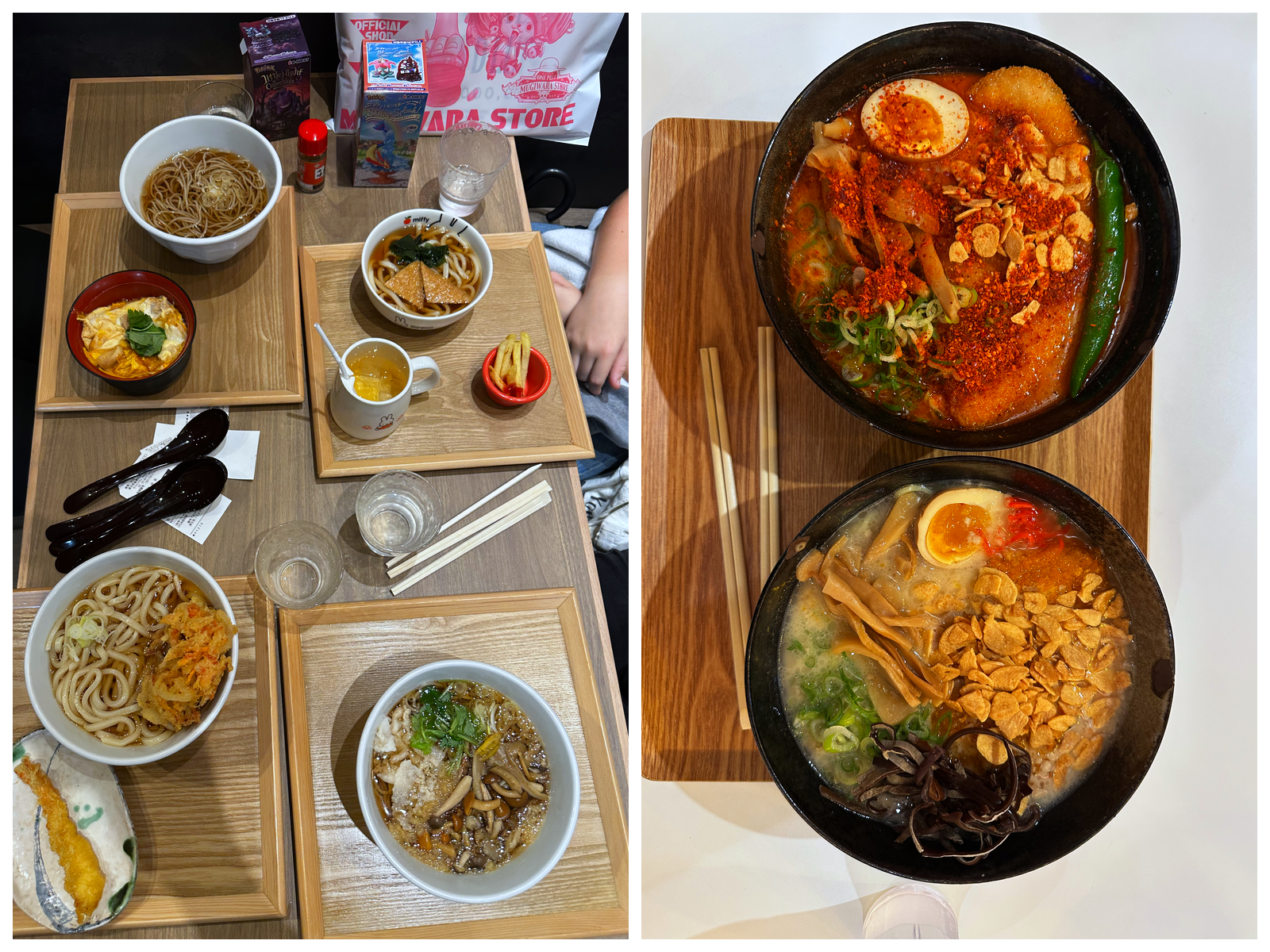
Once you’ve ordered the super spicy ramen, admitting defeat feels like giving the bowl what it wants, so I did my best to finish it and used the excuse, “I’m just saving room for dessert.”
We followed that with little fish-shaped cakes filled with custard, which were considerably friendlier.
And that was more or less our first three days in Tokyo.
The city still feels enormous, and I still have very little idea where I am most of the time.
But somehow that doesn’t seem to matter here.
Tokyo knows what it’s doing.
Luckily, we’re coming back for a few more days at the end of the trip, so we’ll get another chance to work it out.
Comments ()